
Mental healthcare has long played second fiddle to physical healthcare, and it's only in the last handful of years that it is getting the attention and support it deserves.
Fortunately, as time goes on, more and more people are paying attention to mental health challenges and treatments. There's growing support for the availability of treatment, a greater awareness that it's an important component in health and overall living, and even the political support to implement laws requiring that insurance providers cover therapy as much as they do physical healthcare.
The downside is that the fight is still far from over, and not every form of therapy or treatment for mental illness is readily available or covered. It's reasonable, then, that one of your first questions when you're recommended a new treatment is: will insurance cover it?
So it is with TMS. What is TMS, and does insurance cover it here in Detroit? Let's talk about it.
DISCLAIMER: This article is for informational and educational purposes only and should not be considered medical or psychological advice. The information presented here is not intended to diagnose, treat, cure, or prevent any mental health condition or replace professional therapeutic care. Every individual's experience with trauma and mental health is unique. Please consult with a qualified mental health professional, therapist, or healthcare provider to determine the most appropriate treatment approach for your specific situation. If you are experiencing a mental health crisis or emergency, please contact your local emergency services or crisis hotline immediately.
What is TMS Therapy?
TMS stands for Transcranial Magnetic Stimulation.
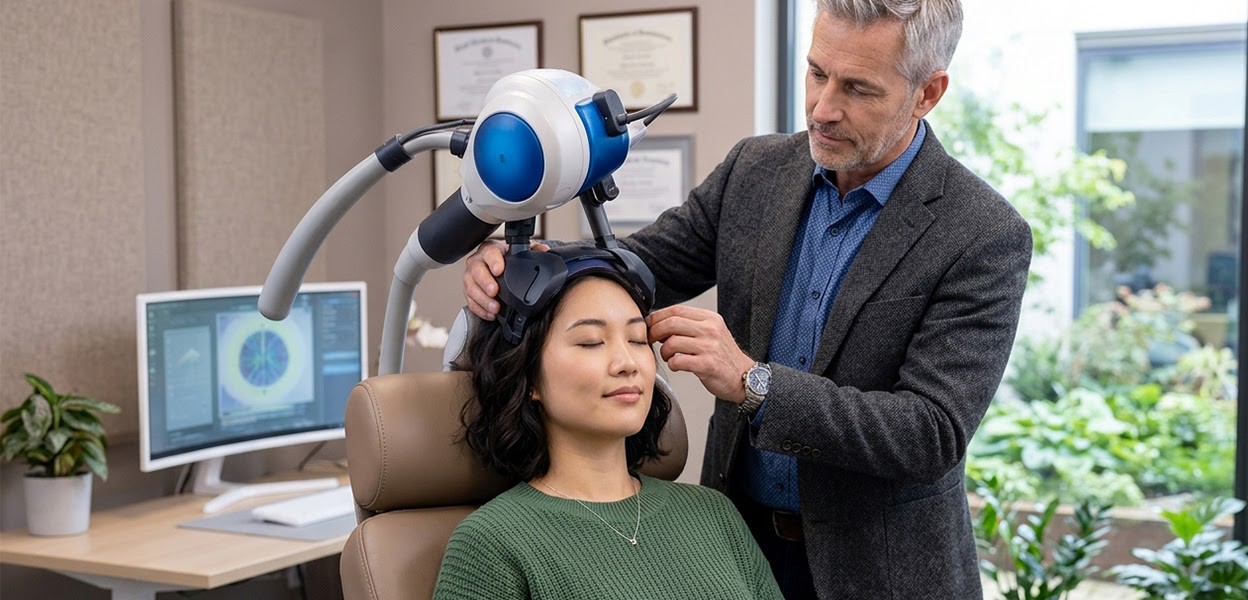
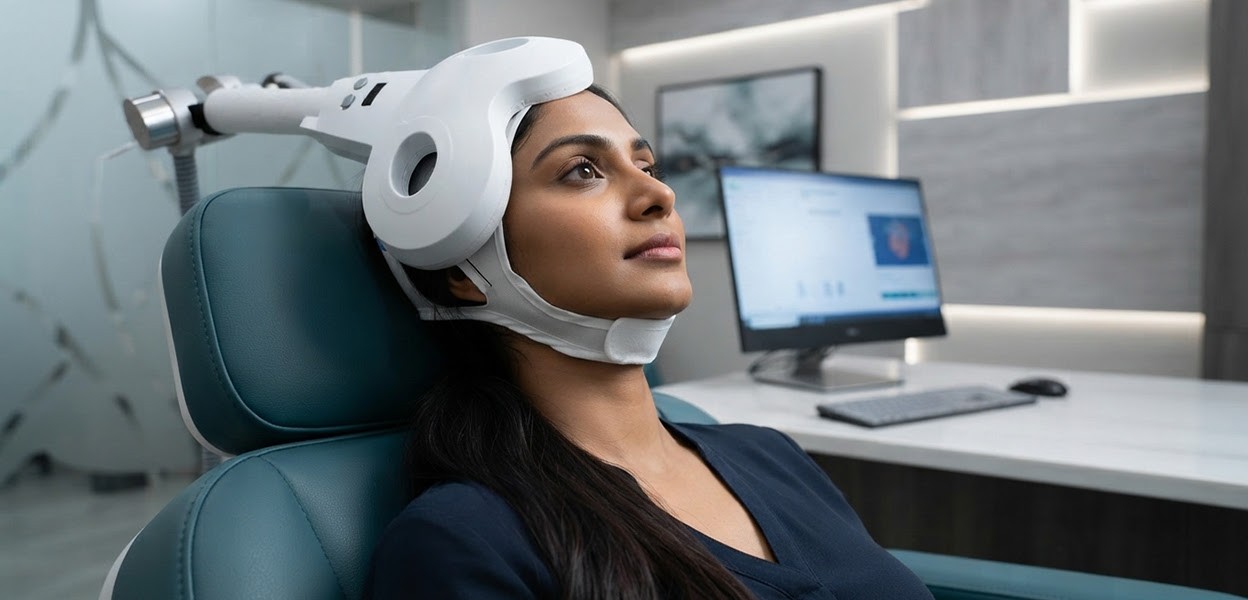
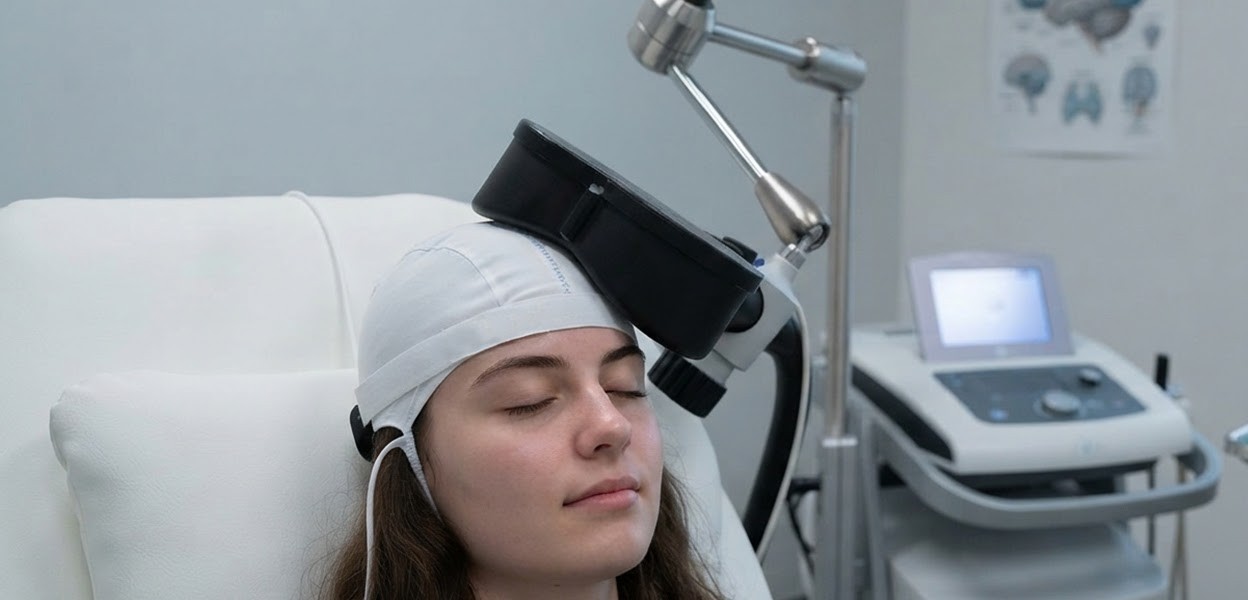
Basically, it uses a device to generate powerful magnetic pulses. This device, when placed against the head, sends those magnetic pulses through the skull and into the brain. It stimulates the axons of neurons in the brain, helping to regulate them. It can stimulate underactive areas of the brain, or conversely, calm and regulate overactive areas.

You know that the brain works via electrical activity, and electricity and magnetism are related, so it stands to reason that magnetism can have an impact on brain activity, right?
What is TMS Used to Treat?
TMS is not a first-line treatment. Instead, it's a treatment that doctors can turn to when more standard treatments have failed. Currently, it is approved by the FDA for five different uses.
- Major Depressive Disorder, particularly treatment-resistant depression.
- Obsessive-Compulsive Disorder.
- Migraines (with aura).
- Anxious depression (anxiety comorbid with major depressive disorder).
- Smoking cessation.
Of these, the first approval came in 2008 for major depressive disorder. Study is also ongoing, and the most recent development is an expanded approval for the treatment of adolescents.
Most people considering TMS probably are doing so because they have a major depressive disorder that has resisted both therapy and standard medications. It's one of a handful of approved therapies that go beyond what medication and CBT can provide alone, but doesn't require an invasive or risky procedure the way something like vagus nerve stimulation or electroconvulsive therapy does.
What Are the Different Forms of TMS?
TMS sounds simple, or as simple as you can make "pointing an electromagnet at a small, specific part of the brain", but of course it's more complex than that makes it sound. For one thing, there are four kinds of TMS.
Repetitive TMS, or rTMS, is one of the more common kinds of TMS. It uses repeated magnetic pulses in specific positions, with sessions lasting anywhere from three minutes up to 40 minutes. It's usually handled with repeated sessions each day for several weeks. It's the go-to style of TMS for treatment-resistant depression.
Theta Burst Stimulation, also known as TBS, is a form of TMS that uses a short burst of strong pulses at a higher frequency, with sessions lasting just a handful of minutes. It's gradually replacing rTMS as the go-to option for treatment-resistant depression, as studies have shown that it's similar in efficacy, but faster to perform.
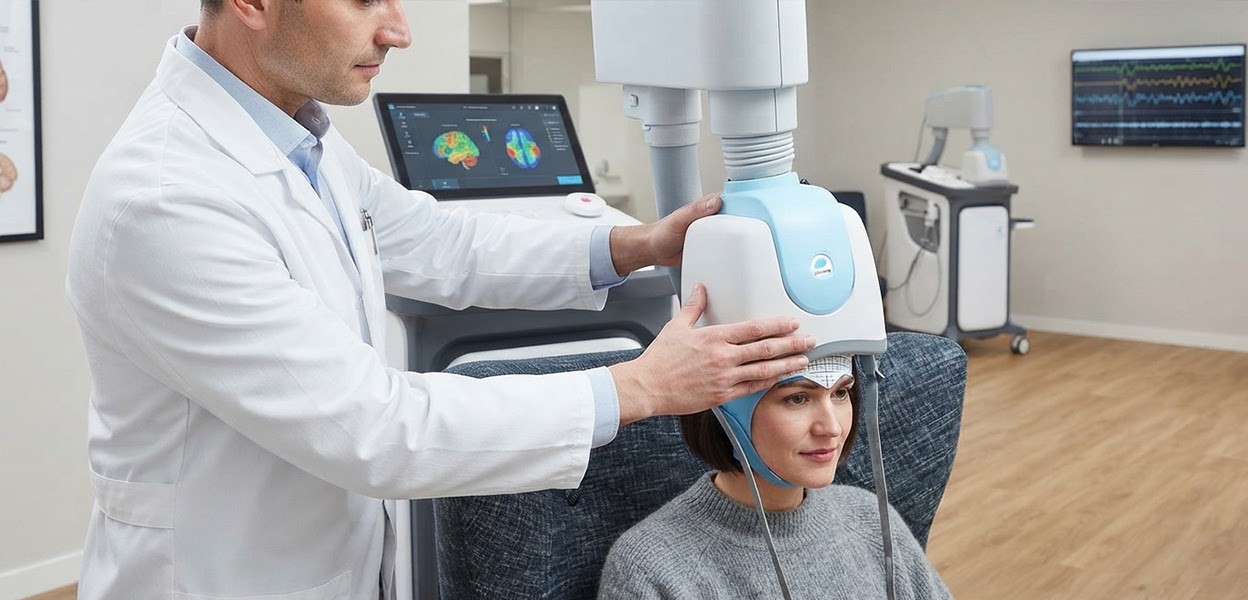
Accelerated TMS, or aTMS, is a faster form of TMS but not quite the same as TBS. It's usually used for major depressive disorder. One of the more common protocols was invented by Stanford and is called the Stanford Accelerated Intelligent Neuromodulation Therapy, or SAINT.
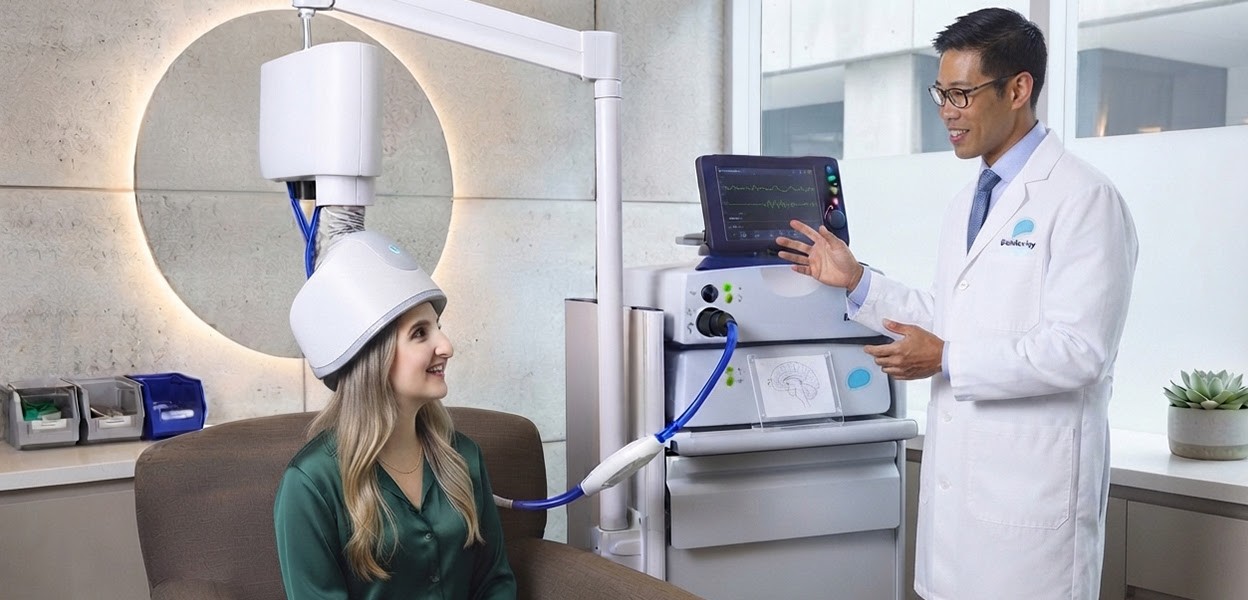
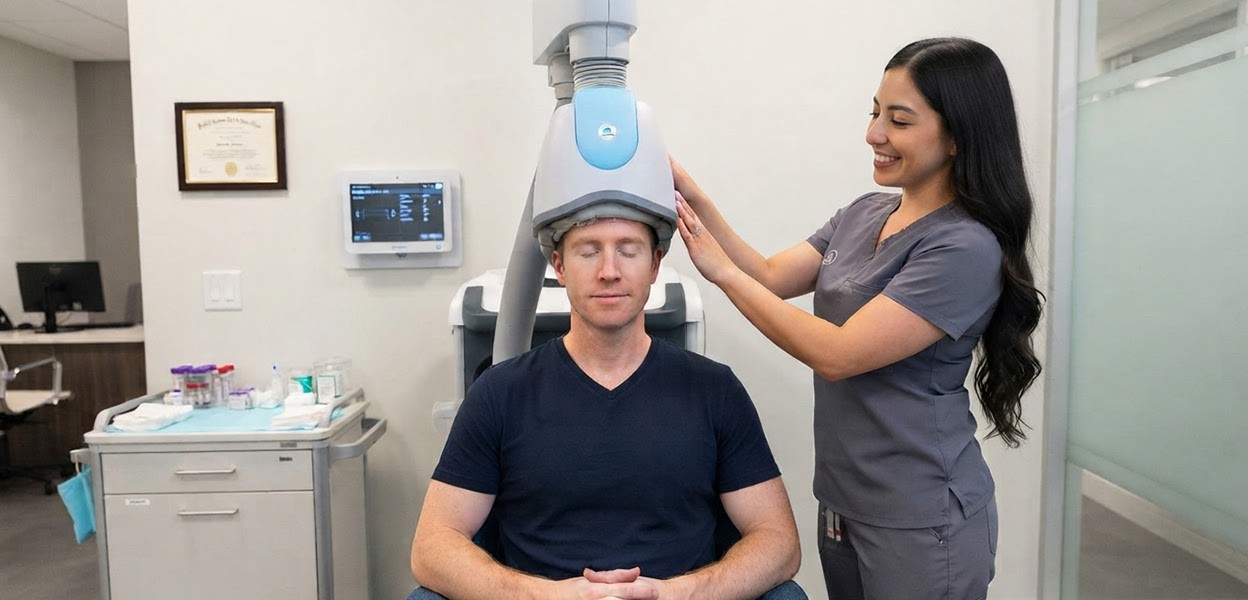
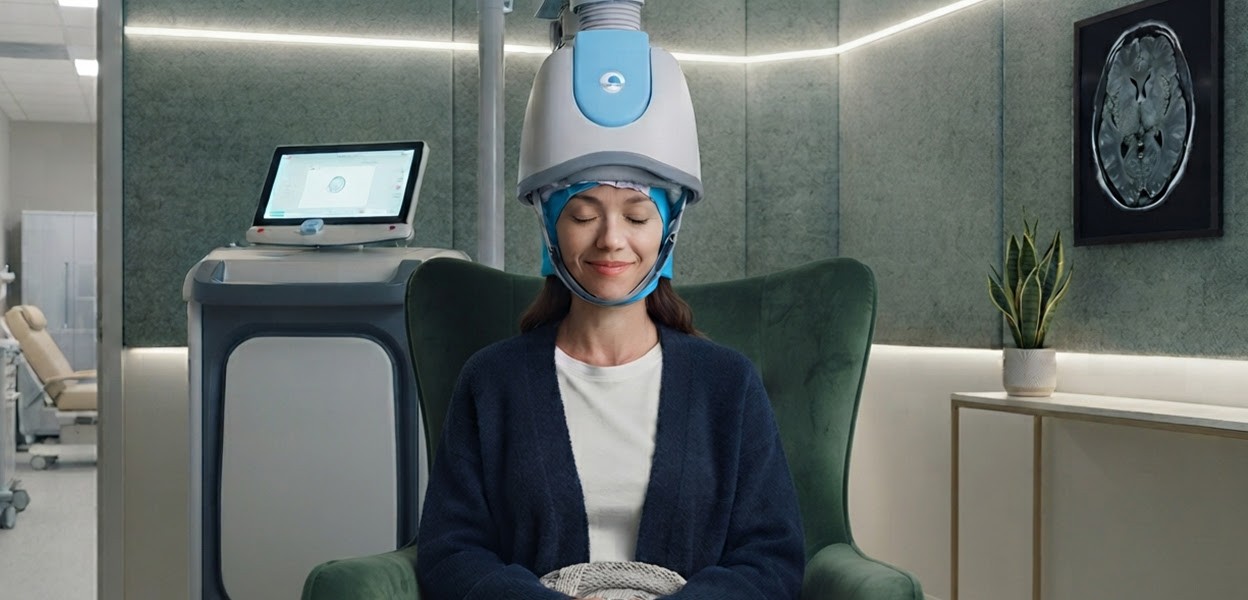
Deep TMS, or dTMS, uses a more robust magnetic helmet that focuses bursts at tissues deeper in the brain than the surface-level pulses from other forms of TMS reach. This allows the therapy to access different parts of the brain, which is why it's used for OCD as well as depression. It's also the form used for smoking cessation.
Each of these will be chosen by your specialist and will be tuned to match your specific needs.
Is TMS Covered by Insurance?
This is, as always with insurance, a difficult question to answer. The short version is "yes, maybe, depending on your circumstances." The longer version will take a minute to go through.
First, insurance will generally only cover FDA-approved treatments. As mentioned above, that's a limited selection of TMS protocols used for specific purposes, most typically treatment-resistant depression. You may be able to get TMS covered for purposes like OCD or smoking cessation, though it might be harder to gain approval.
You can double-check if your insurance covers TMS. The easiest way is to call the number on the back of your insurance card, or visit the website for your insurance provider. They will generally have a document that outlines your plan and what it covers, and can tell you whether or not TMS is covered. They may also have a provider directory that can tell you what Detroit-area TMS providers are part of their network.
Second, you have to consider the specific provider of the TMS therapy you're seeking, which is why having a provider directory is helpful. Different providers will participate in different insurance plans. This means that, while your insurance might cover TMS and your local TMS provider might accept insurance, if they don't accept your insurance, you might need to find a different provider. Or change insurance, of course, but changing providers is usually easier.

Third, you will need an official diagnosis relevant to your treatment. Even if you believe you have treatment-resistant depression, OCD, or major depressive disorder, you need a mental health professional to diagnose you. If you don't have that diagnosis, your insurance will probably deny the procedure.
Similarly, you probably will have to have tried other treatments first. Insurance plans typically require that more readily available, less expensive treatments be tried first, sometimes to the detriment of patients. You may need to have tried both a therapy like CBT and at least one medication before TMS can be approved. Expect to be asked to provide documentation that you have tried at least two different medications without sufficient relief before TMS is approved.
As with most insurance-covered procedures, you will also need a prior authorization before treatment can begin. Fortunately, your TMS provider will probably handle this for you prior to scheduling your appointments.
While all of this sounds like a lot of hoops to jump through, a lot of it may be handled on your behalf, like the prior authorization. Documentation of past treatments will likely be filed with your insurance, either by the person prescribing TMS or just because insurance was also covering those treatments.
So, there's the longer answer: yes, it's likely covered, as long as you meet the criteria.
Are You a Good Candidate for TMS?
TMS can potentially be a good treatment option for a lot of people with depression or OCD that is not otherwise responding to treatment. If you have a major depressive disorder or obsessive-compulsive disorder, and you've tried therapy and medication with no results, TMS might be your next best option.
Like we mentioned above, there are other options as well. However, they might not be as recommended as TMS. TMS is noninvasive and has little in the way of side effects, showing a 50-70% response rate and a 30-40% remission rate for major depression.

Other options have more serious drawbacks. For example:
- Electroconvulsive therapy is highly effective but known to cause amnesia, physical discomfort, and has broader risks because it involves both general anesthesia and a medically induced seizure.
- Vagal nerve stimulation is moderately effective, but requires implanting a device similar to a pacemaker to stimulate the vagus nerve. It can also take months of use before it works, and is considered an adjunctive therapy, so you still need medications and therapy.
Obviously, if one of these works for you, great! We're not going to say they're bad options, just that they're more invasive and have more side effects than TMS.
There are a couple of reasons why TMS might not be the right option for you, despite all of this.
The biggest is if you have any sort of metal or electronic implants in your head or neck. It's one thing if you have piercings, which can be removed. But if you have something like a metal plate in your skull, metal clips or wires in your neck, cochlear implants, aneurysm clips, brain stimulators, or cardiac pacemakers, it's advised that you not use TMS. The strong magnetism can move or damage these components, and that can cause harm.
Additionally, TMS has the very rare chance of causing seizures. So, it's not a good idea to go with TMS if you're at risk of that happening to you.
What Are the Side Effects of TMS?
Side effects are minor and mild. Some people have headaches or discomfort in their scalp where the TMS device was used. Some have mild facial twitching and can experience twitching in their hands when the treatment is active. In very rare cases, TMS could induce seizures, which is why individuals with a history of seizures or epilepsy are not good candidates.

Other than that, you don't have anything to worry about.
What to Expect from a TMS Appointment
For as scientifically fascinating and technologically interesting as TMS is, the actual appointments for your sessions are going to feel like barely anything.
Prior to treatment, you'll have a screening and exam. During this session, the provider will explain the details of TMS, what you can expect, and any limitations or restrictions you might have. You generally don't have to worry about adjusting your diet beforehand, and the only real adjustment is likely to be removing or not wearing jewelry.
Some people worry that, because it's a through-the-skull treatment, they'll need to cut their hair. Fortunately, you don't need to. You may be asked to avoid heavy styling, which can make it difficult to accurately place the TMS coil, and you can't wear hair clips or metal hair accessories.
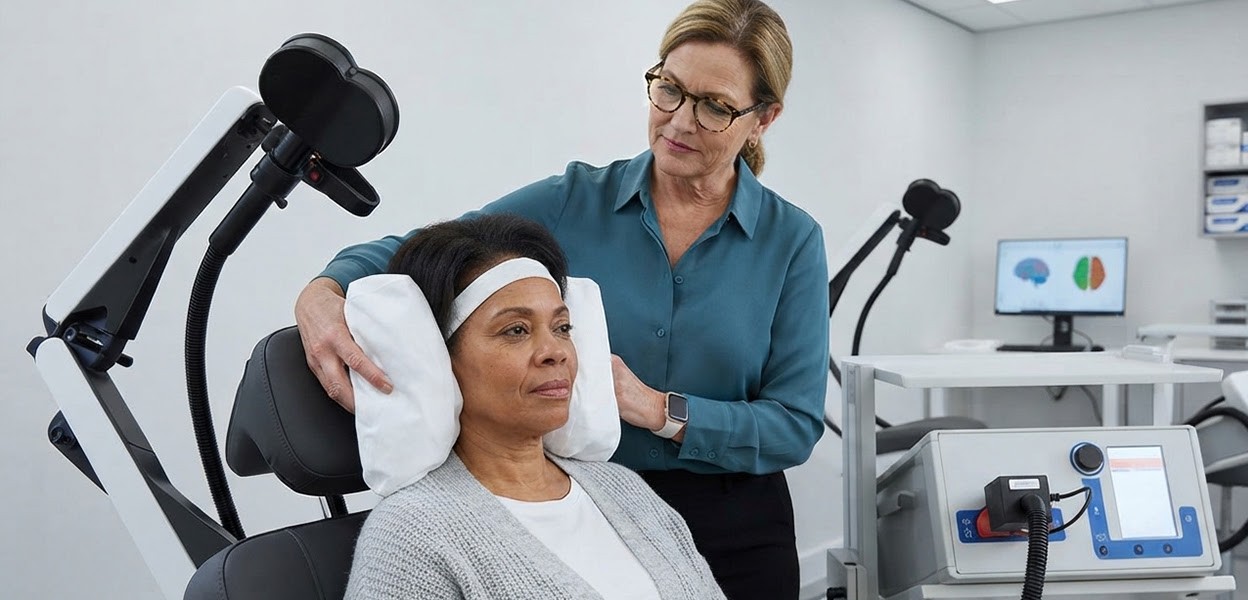
During your actual TMS sessions, you'll have a quick office visit. You remove anything metallic that is unsafe around the magnet and sit in a reclining chair. You'll also be given hearing protection, since the device can be loud. Your provider will place the TMS device and activate it. You may feel tapping, twitching, or other reactions. This is normal; your provider will use your reactions to calibrate the device properly.
Treatment will then proceed. You'll hear clicking and might feel tapping, and then… you're done. Depending on the protocol, this might be less than five minutes, or as long as 40, with possible repositioning along the way. Then, you take off the hearing protection, gather your stuff, and go on about your day.
This repeats each session for as long as you need sessions. That's it! If the protocol gave you a headache, you might be asked to wait a few minutes before leaving, in case any complications develop; it will generally fade quickly.
For the sake of safety, you'll probably be asked to have someone give you a ride home.
Answering Questions about TMS
Since TMS is so fascinating, we've covered a few additional questions you might have about the therapy here.
How strong is the magnetism in TMS?
A TMS magnet pulses at around 1.5 to 3 tesla, which is on par with a hospital MRI.
For comparison, a strong rare earth magnet like neodymium tends to measure around 0.5 to 1.5 tesla, while a common fridge magnet is a meager 0.005 tesla.
What else can TMS treat?
Right now, all TMS is approved to treat is depression, OCD, certain migraines, and smoking.
There's currently ongoing research investigating TMS for a wide range of other purposes, including Alzheimer's disease, bipolar disorder, BPD, eating disorders, tremors, fibromyalgia, Parkinson's disease, PTSD, schizophrenia, substance use disorder, tinnitus, TBI, and more.
Until any evidence comes out that it's effective for any of those, though, it generally won't be available, and definitely won't be covered by insurance.
How long will you need TMS?
It depends. One of the more common protocols is weekday sessions, five days a week, for 4-6 weeks, totaling around 30-36 sessions. Recent approvals of shorter-duration treatments may cut this number down.
As many as 70% of people who complete this course experience a significant reduction in depression symptoms. Around 30-40% experience remission, a total absence of symptoms. For many people, this is life-changing.
Is TMS a permanent cure?
Unfortunately, no. TMS can be long-lasting, but it's not an immunization against depression. Symptoms can come back, especially if you experience major life stressors or have other underlying illnesses. Many people end up getting "booster" sessions to refresh the benefits from time to time, and pair TMS with other lifestyle changes or treatments to help.
Here at BMC-Troy, we don't provide TMS; you need specialized equipment and training for that. We do, however, offer treatment for depression and can refer you to TMS if standard treatments fail. We're here to help, and if we can't help directly, we can help you find something that will.
To get started, you can fill out our new patient intake form - once that is done we will call you to schedule an appointment. Since TMS requires previous treatments to be attempted first, we can help get that ball rolling and get you the care you need.