
One of the cruel ironies of mental illness is that the things you want treatment for are also making it harder to seek out treatment.
When you're depressed, it can be difficult to get out of bed or go about your daily life, let alone take the initiative to set up therapy appointments and go to a therapist's office.
When you're anxious, you think of all the ways things can go wrong, and psyche yourself out of taking actions even if you know, logically, they'd be both fine and beneficial.
When you have ADHD, it's hard to handle schedules and keep on top of appointments, and it's easy to miss a deadline or let your therapy fall through the cracks.
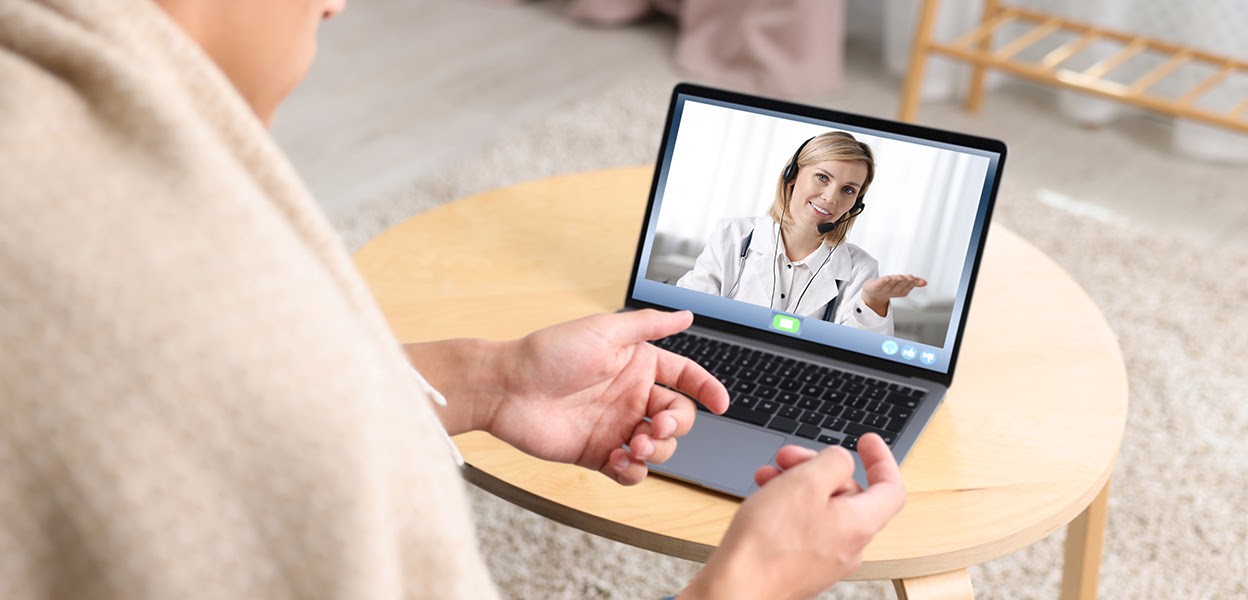
Fortunately, an increasing number of therapists and specialists are offering telehealth services for their therapy. Telehealth helps lower the barrier to seeking treatment by a significant margin, and can even make therapy more accessible to people who otherwise wouldn't be able to visit a therapist in person.
The question is, does insurance still cover therapy if you aren't going into an office and seeing a therapist in person? While we can't speak for other states in detail, here in Michigan, we have good news.
DISCLAIMER: This article is for informational and educational purposes only and should not be considered medical or psychological advice. The information presented here is not intended to diagnose, treat, cure, or prevent any mental health condition or replace professional therapeutic care. Every individual's experience with trauma and mental health is unique. Please consult with a qualified mental health professional, therapist, or healthcare provider to determine the most appropriate treatment approach for your specific situation. If you are experiencing a mental health crisis or emergency, please contact your local emergency services or crisis hotline immediately.
Does Insurance Cover Telehealth Therapy in Michigan?
Yes!
While many insurance providers will happily cover telehealth regardless, Michigan actually passed a piece of legislation to ensure that coverage is available equally between in-person and telehealth services.

The current text is part of the Michigan Compiled Laws, Chapter 500, Act 218 of 1956, section 3476. It says this:
"An insurer that delivers, issues for delivery, or renews in this state a health insurance policy shall not require face-to-face contact between a health care professional and a patient for services appropriately provided through telemedicine, as determined by the insurer. An insurer described in this subsection shall not require a health care professional to provide services for a patient through telemedicine unless the services are contractually required per the terms of a contract between the insurer and an affiliated provider or a third-party vendor for telemedicine first or telemedicine-only products, and clinically appropriate as determined by the health care professional. Telemedicine services must be provided by a health care professional who is licensed, registered, or otherwise authorized to engage in the health care professional's health care profession in the state where the patient is located. Telemedicine services are subject to all terms and conditions of the health insurance policy agreed on between the policy holder and the insurer, including, but not limited to, required copayments, coinsurances, deductibles, and approved amounts. If a service is provided through telemedicine under this section, the insurer shall provide at least the same coverage for that service as if the service involved face-to-face contact between the health care professional and the patient."
That's a lot, but it breaks down pretty easily.
- It applies to insurance providers that renew policies in Michigan, regardless of where the insurer is based.
- It mandates that insurance providers cannot force in-person appointments for services that can be provided through telehealth. Obviously, some services must be in person (you can't do a surgery remotely), but for things like therapy, physical presence isn't a requirement.
- Conversely, it mandates that insurance providers cannot force a healthcare professional to provide only services via telehealth when they can also be provided in person, barring exceptions such as contractual limitations or telehealth-only products.
- Telehealth services must be provided by licensed, registered, authorized providers in the state, so telehealth therapy is sure to be provided by therapists with equal training as those you would see in person.
- Telehealth services are subject to all of the same terms and conditions as in-person services, including copays, deductibles, and more.
- And here's the critical line: "If a service is provided through telemedicine under this section, the insurer shall provide at least the same coverage for that service as if the service involved face-to-face contact between the health care professional and the patient."
Essentially, this means that Michigan state law requires insurance providers to cover therapy via telehealth if they cover it via in-person visits. And, since a different set of Michigan laws, as well as federal laws, require that insurance companies cover mental health as well as physical health, it means insurance is going to cover mental health therapy via telehealth services.
For the record, the telehealth parity law was first implemented in 2012, so this has been on the books for a while now. There have been a few additional amendments and changes in wording since, but the core has remained the same.
Does the Form of Telehealth Therapy Matter?
If you've heard about the issues and confusion surrounding telehealth mandates here in Michigan before, it's because the original 2012 wording left a lot to be desired. In particular, it specified that telemedicine must be provided via "two-way, interactive audio or video systems."
In other words, a phone call or video call.

These days, there are a lot of modern telehealth services, especially for therapy, that work using other means. In particular, live chats and asynchronous chats are now widely available.
An amendment in 2016 expanded the language, so now telehealth also includes things like email, store-and-forward messaging, and more.
Now, you probably aren't going to be getting the best therapy you could if you're relying on email to get it done, but you're not required to do a video call, at least not anymore.
Can Medication Management be Handled via Telehealth?
This is where things get a little trickier.
A related telehealth law, SB 753, defines "prescribers" according to the law, and allows this select group of people to write prescriptions via telehealth. The list is physicians, dentists, doctors of osteopathic medicine and surgery, podiatrists, and optometrists.
You might notice that things like psychotherapists are not on the list. Well, this also isn't anything new; psychotherapists and similar providers can't write prescriptions in person either.

If you're thinking of times you've gotten prescriptions from your therapist before, it's because of a common workaround and partnership most therapists use.
Some providers of therapy, specifically psychiatrists, are full and licensed doctors with the ability to write prescriptions. For those that aren't, like therapists, they usually partner with doctors. When the therapist identifies a need and "writes" a prescription, it's a recommendation for the doctor to actually write the prescription.
This can all be done remotely using telehealth services, so if you want to work with a therapist rather than a psychiatrist, but still have the option of medication as part of your treatment, you're free to do so. Being remote with telehealth doesn't prevent you from using this option.
That said, medication management via telehealth does come with a few stipulations that talk therapy doesn't.
- First, at our office, patients receiving medication management are required to come in for at least two in-person appointments per year. The rest of your medication appointments can generally be handled via telehealth, but those two visits are a firm part of the process.
- Second, whether any given appointment can be done remotely is ultimately up to your prescriber. Prescribing safely requires certain information, like current vital signs. If that information isn't making it to your prescriber - say, you haven't followed through on getting your vitals taken before a telehealth appointment - your prescriber may require you to come into the office instead, so they can make sure it gets done.
- Third, there's a federal question that's still being sorted out. Before the pandemic, federal law generally required an in-person evaluation before a provider could prescribe federally controlled medications (a category that includes common psychiatric medications like stimulants for ADHD and certain anti-anxiety medications) via telehealth. That requirement has been temporarily suspended since 2020, and the suspension has been extended several times since, but each extension has an expiration date, and no one knows yet whether the flexibility will be made permanent, modified, or allowed to lapse. If you're prescribed a controlled medication, be aware that in-person requirements could return in the future, and your prescriber will keep you informed of anything that affects your care.
None of this changes the core point: therapy itself is fully available via telehealth, and most medication management can be too. It just isn't 100% remote, 100% of the time.
Is Telehealth Therapy a Good Idea?
Now you know that you can get telehealth therapy the same way you can get in-person therapy, and that insurance will cover it. But is it worth it, or should you still try to go to in-person sessions instead?
There are two ways to look at this question.
The first is simple: if the choice is between telehealth and nothing (via missed appointments, mental health roadblocks, or external problems like abusive parents), then telehealth is obviously a better option.
The second way of viewing the question is a little trickier. If you're confident that you can attend therapy in person, but you could do telehealth instead, is one option better than the other?
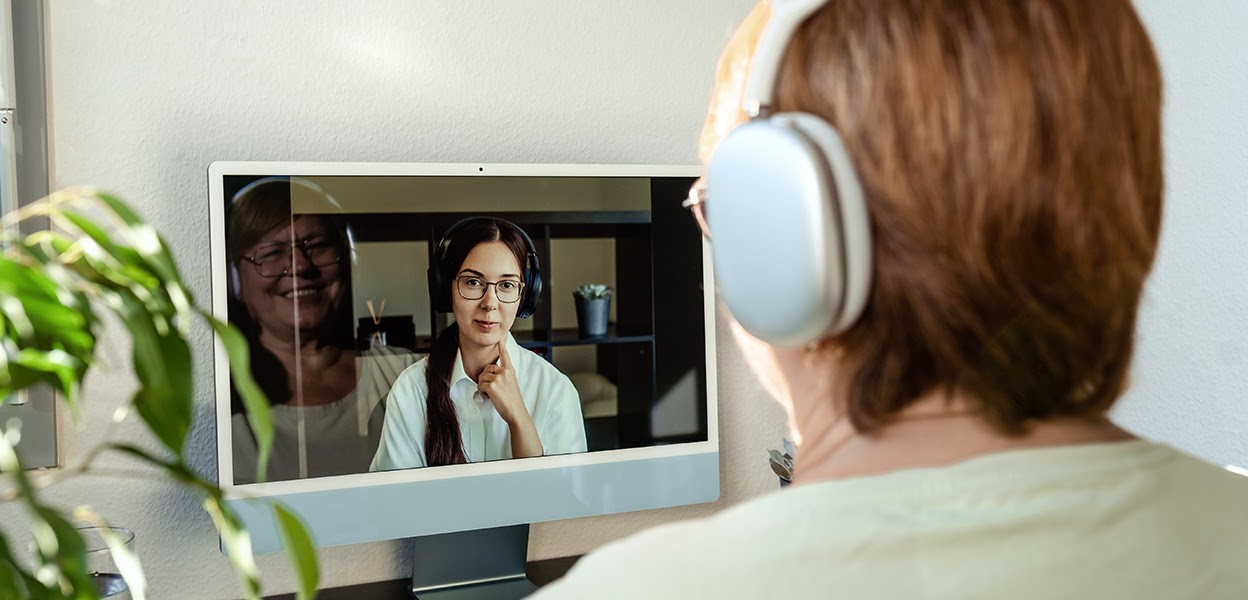
Well, there are plenty of benefits to telehealth.
- It's convenient. Depending on where you live, a trip to a therapist's office could be 15-30 minutes of driving, if not more. Telehealth can be done wherever you are, whether you're at home in your bedroom, on campus for school, on a break at work, or otherwise out running errands. As long as you can set aside the time, you can do it.
- It's flexible. Some people find it awkward to talk about their issues face to face, but are more open when there's some physical distance, a screen, or an interface in the way. Some do best via live chats, some via audio calls, and some on video. It can be entirely personal preference, but it's all potentially available.
- It cuts the secondary costs. A lot of people who want to seek therapy find that work schedules, childcare burdens, variable scheduling, and other issues can get in the way. Even something like being limited to bus schedules can be a burden, but telehealth does away with it.
Telehealth therapy can also be a great option for people who live in situations where they can't seek in-person therapy. It's not uncommon for, say, teenagers with issues to want to seek therapy, but they can't because their parents won't support them in the efforts.
Telehealth can allow them to seek therapy without the in-person meeting, as well as to do it without oversight or permission from people who might oppose it.
Are There Ways Telehealth Therapy Falls Short?
For all of the benefits of telehealth therapy, there are some drawbacks that are worth considering.
A big one is that not all services can be done remotely. For example, here at BMC-Troy, we offer the QbTest as an ADHD assessment tool. This test requires special tools and software we have in our office, but which can't be done remotely. To get that assessment, you would need to visit our office.
Another potential issue is that remote therapy and telehealth can feel less "real" to some people. Since you aren't spending the time and resources to get to an office, it doesn't feel as high stakes, and you might be tempted to take it less seriously. This can lead to therapy that is less effective. This isn't true of everyone, or even most people, but if you're prone to this disconnect, it's worth knowing.
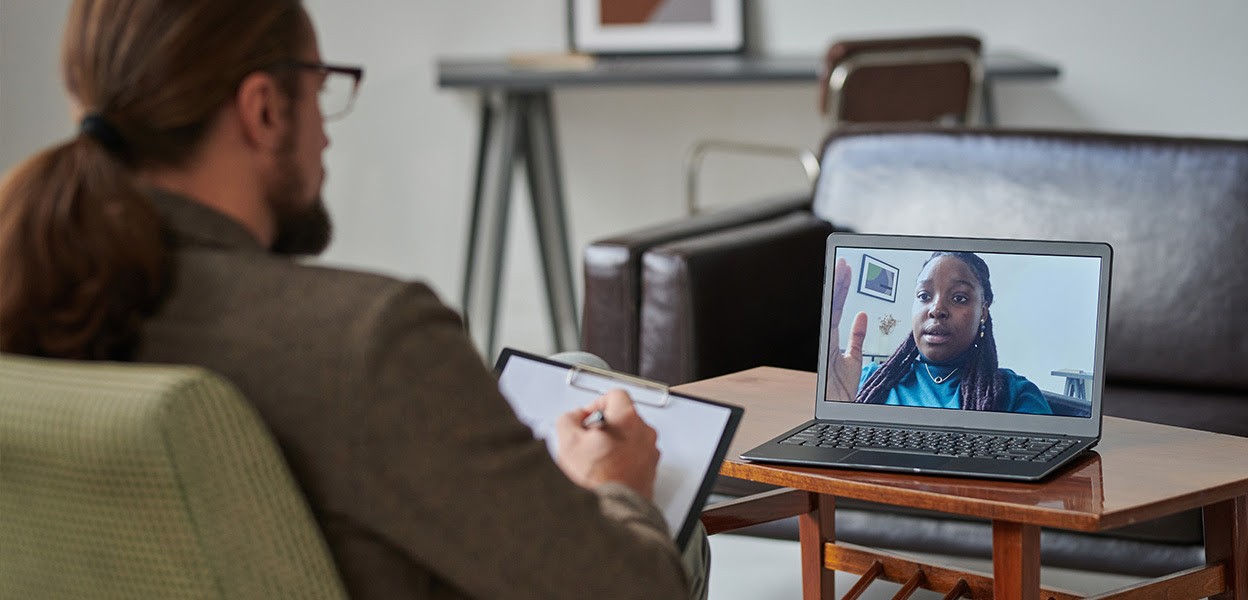
There's also the matter of fit. We know that finding the right therapist can be a trial, and it often takes trying out several different therapists before you find one that clicks with you. This is harder to assess remotely.
The reason why is partly to do with another potential drawback: the lack of body language feedback. A lot of human communication is non-verbal, from body language to glances to small noises and more. Most of that is lost with telehealth. This is a two-way barrier, too; just as you have trouble evaluating your therapist, your therapist loses some of the cues they would use to evaluate you.
And, of course, there's always the potential burden of tech problems. A phone with a bad connection, a damaged microphone, a stuttering video call, all of these can get in the way of an appointment. We've even heard of people "missing" appointments because their phone didn't ring when it should, even though they were ready and waiting.
To be clear, despite all of this, telehealth therapy is still very effective for most people and is an excellent option, especially for people who can't otherwise get in-person therapy easily or conveniently.
Michigan Telehealth Therapy with BMC-Troy
Are you interested in trying telehealth therapy? You're in luck. At BMC-Troy, telehealth is widely available as one of our services. All you need is a device capable of audio and video and a stable internet connection.
Don't feel like you have to see a therapist in person, either. Even if you're able-bodied and have a wide-open schedule, you can still get telehealth therapy. We aren't going to question why you prefer remote therapy, nor will we pressure you to come into the office instead. All we want is to connect you with the therapists who can give you the best possible treatment for the issues that cause you to struggle.
To get started, all you need to do is contact us. You can fill out our new patient intake form here on our website, or you can call our office during business hours at 248.528.9000. Either option will get the process started, and we can get you a confidential assessment and start the road to a better state of mind.