
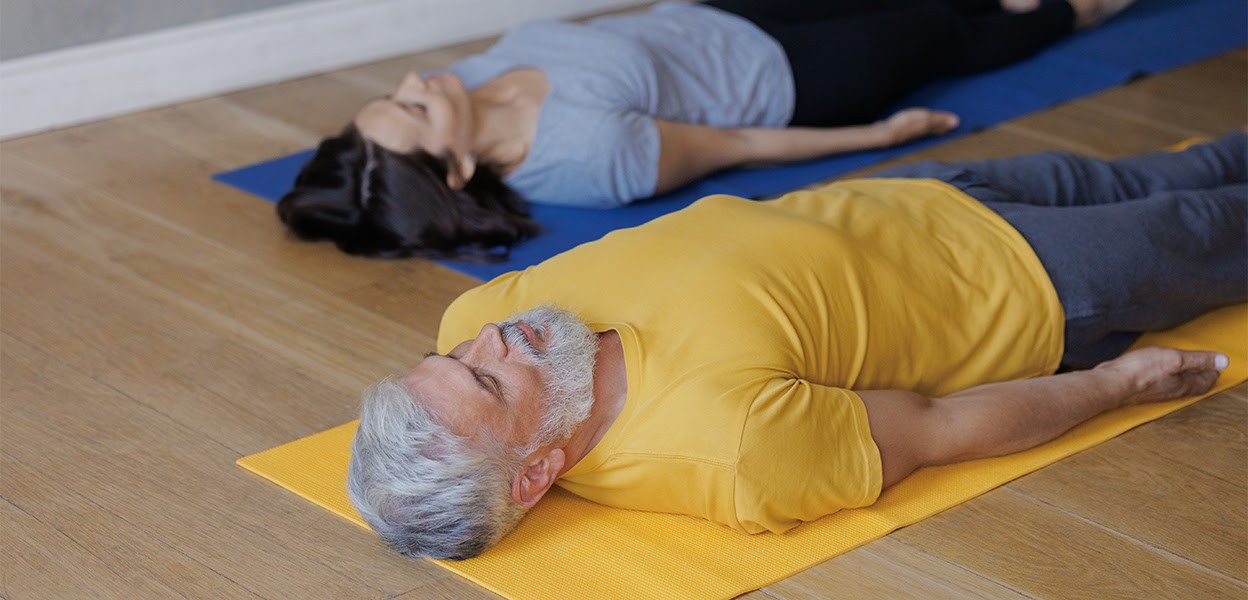
The mind and the body are inseparable, two sides of the same coin, and they affect each other. You know this well: from the butterflies in your stomach when you're anxious, to the tension across your shoulders when you're nervous, to the light and pleasant sensations of euphoria.
It makes sense, then, that if you have mental health struggles or traumas, that they affect the body. The reverse, then, should also be true; things that affect the body can have an impact on the mind.
This is the core concept behind Trauma Release Exercise therapy, or TRE. To help alleviate trauma and its grip on your mind, you can address the ways it affects your body.
For some of you, this makes sense right away. Others may be more skeptical. That's why we've put together this guide; to explain the history, efficacy, and techniques of TRE, and help you decide if it sounds like a promising therapy for you.
DISCLAIMER: This article is for informational and educational purposes only and should not be considered medical or psychological advice. The information presented here is not intended to diagnose, treat, cure, or prevent any mental health condition or replace professional therapeutic care. Every individual's experience with trauma and mental health is unique. Please consult with a qualified mental health professional, therapist, or healthcare provider to determine the most appropriate treatment approach for your specific situation. If you are experiencing a mental health crisis or emergency, please contact your local emergency services or crisis hotline immediately.
The History of TRE
Trauma Release Exercises, also known as Tension and Trauma Releasing Exercises, is a relatively new form of somatic therapy. It was first developed around the early 2000s by a man named David Berceli.

Berceli is a doctor of social work and a trauma intervention educator who spent a lot of time working in war-torn regions like Lebanon and Syria. During that work, he observed that children who had been exposed to trauma often spontaneously shook with tremors, while adults suppressed that urge.
This observation led him to theorize that tremoring is a psychosomatic response, a way that the mind triggers the body to act as a form of stress regulation. Using this as a baseline, he went on to develop a set of physical exercises that induce tremors safely, allowing the body to release the physical tension and signs of trauma, which then allows the mind to relax from holding onto those traumatic thoughts and memories.
Today, TRE is growing more and more popular, with hundreds of trained practitioners around the world offering the therapy. Still, it's in its relative infancy as a treatment for trauma, so there are a lot of questions and a lot of unknowns.
How Does TRE Work?
The high-level theory is relatively simple.
When you experience something traumatic, that experience weighs on you. That weight isn't just mental, either; you experience many physical signs and symptoms, such as muscle tension, fatigue, hypervigilance, and more.
This has a self-reinforcing feedback loop built into it. When you're tense, when you're fatigued, when you're anxious, all of that feeds back into your mind and affects your thoughts. You have more trouble focusing, you have less energy, you experience more PTSD triggers to a higher level.
Have you ever had a really good stretch, and while you're stretching, felt your limbs begin to shake? This is the sort of tremors involved in TRE. The goal is to carefully stretch, induce this shaking, and shake out the physiological impact of trauma.
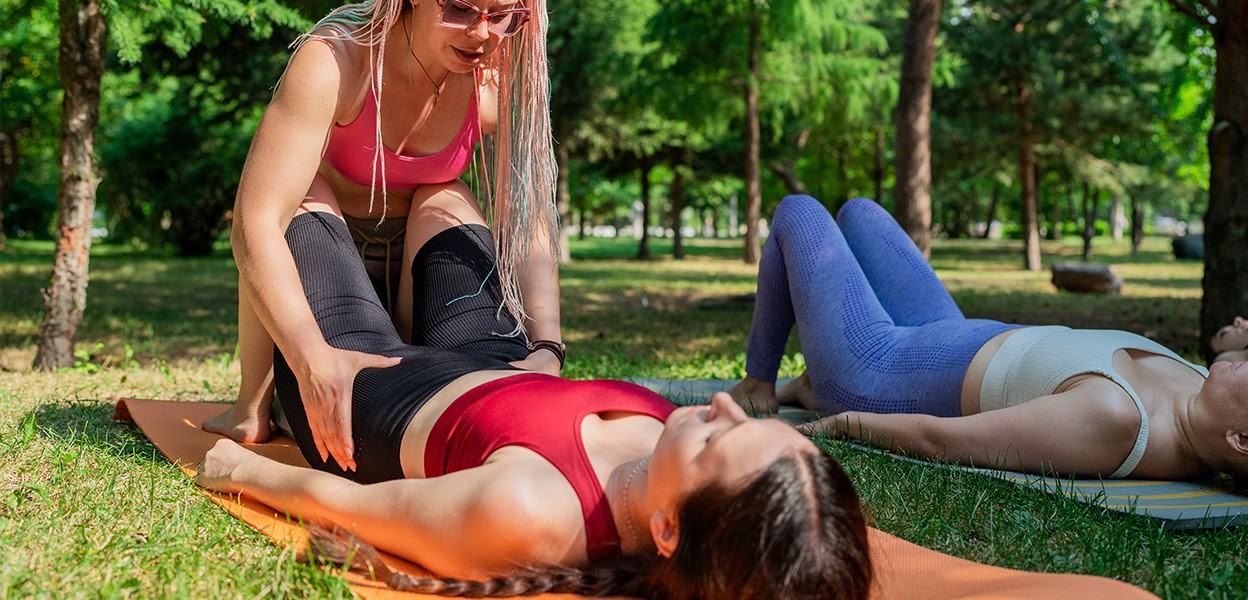
When you release those tense muscles, when you relax the fatigued body, when you allow yourself to rest, your mind can then have an easier time processing and letting go of the traumatic experiences.
TRE specifically focuses on the Psoas muscle. This muscle is long, shaped like a ribbon, and runs from your lower back down to the top of your femur. It's a core muscle, and stretching it the right way can induce these tremors throughout your core and your body.
What Does a TRE Session Look Like?
In short, exercise. TRE sessions begin with simple guided exercises that are designed to fatigue leg and hip muscles, including the Psoas muscle. Once these exercises are complete, you lie down, usually on a yoga mat or similar surface, on your back. From there, you allow the fatigued muscles to tremor and shake.

After this, your session will end in a cool-down and time for resting and reflection. This helps your body calm down, and your mind process what you're feeling.
Overall, sessions take around 30-60 minutes and are typically conducted 1-3 times per week.
One common question we're asked is whether or not you need to talk about your trauma during a session. TRE is not a talk therapy; you don't need to talk about or even think about your specific traumas. It's not here to dredge up and reprocess traumatic experiences the way EMDR is, or discuss them and think about them the way CBT does. It's a purely physiological therapy option.
Is TRE Safe?
TRE is generally considered safe for most people, but there are some caveats here.
There are a few reasons why TRE is not recommended. Individuals who are pregnant, people with a seizure disorder or epilepsy, anyone who has recently undergone a major surgery, those with injuries to the areas affected, and similar conditions are all contraindications.
TRE induces shaking, so basically anything that would be negatively impacted by shaking, or that shaking can trigger, is a reason to skip TRE.
Overall, though, the risks are minimal for most people. As long as you practice TRE under the guidance of a trained therapist or other professional, and limit how much you practice it, you should be fine.

Are there side effects? Some, potentially.
- Since TRE triggers certain muscles to tremor in ways you aren't used to, it can leave you feeling fatigued.
- TRE in the context of trauma can bring up traumatic thoughts and feelings, and lead to an emotional release that could include laughter or crying.
- Some people experience particularly vivid dreams after sessions early on in treatment.
High levels of muscle soreness or potential minor injury can occur if you overdo it, which is why it's important to try TRE under the guidance of a trained professional, at least until you learn where your limits are.
Is TRE Effective?
It's always a good idea to be skeptical about a novel therapy you haven't heard of before, especially if you see mixed reviews or excessive promises or claims about it. There are some proponents of TRE who call it life-changing and claim it has cured their PTSD in just a session or two.
On the other hand, there are others who get nothing out of TRE.
This is all a testament to how complex mental health is, how tricky the association is between the mind and the body, and how every individual experiences life differently, even if outward symptoms or even personal experiences are similar.
This is why we always like to look at the research. Has TRE been researched, and if so, what does that research say?
You can sum up the results as "potentially positive but mixed, with more study needed to draw firm conclusions."

There are a handful of studies that have been conducted into TRE for a handful of different purposes. There have been some positive results, though the most positive study was a small pilot study run by Berceli himself. There have also been some positive results using TRE for things like multiple sclerosis, and a study showing no real effect on restless leg syndrome.
The biggest caveat to all of this is simply that TRE is very new as far as therapies go. The studies that have been conducted are all very small-scale (we're talking fewer than 50 participants), short-duration, pilot studies or preliminary case reports. There hasn't really been anything in the way of large, long-term, longitudinal, or double-blind studies into TRE yet.
What we do know:
- Some people report it to be effective for their individual cases.
- It's generally safe and well-tolerated for most people.
- It's cheap and easy, with no requirements for equipment, medications, or facilities.
Is it guaranteed to work for you? No; everyone's trauma is different and responds differently to various treatments. Is it worth trying? Certainly. If it does help you, that's great! If it doesn't, you've lost nothing but a few sessions of experience. Plus, even if it doesn't help you with trauma, anxiety, or PTSD, it might still be beneficial from a purely physiological standpoint for muscle relaxation and tension release.
How Long Does TRE Take to Work?
This isn't a question we have a firm answer to.
Some people report feeling better after just a week or two of sessions, where sessions occur 1-3 times per week. These may be small-scale improvements, or they may be surface-level improvements that don't directly address the underlying trauma.

Longer-term improvements tend to take longer to achieve. Some people don't feel the effects for months.
And, certainly, some people don't feel any improvements at all. There's no shame in this; TRE isn't guaranteed to work.
Does TRE Work for Any Mental Illness?
TRE is not actually meant to address mental illness or trauma itself directly. Instead, it's meant to help with the physiological symptoms of these mental disorders, alleviate stress, and make it easier to heal and recover both physically and mentally.

As such, it's aimed at things like:
- The hypervigilance, startle response, and intrusive memories related to PTSD.
- Chronic muscle pain, tension, and physical holding patterns.
- Generalized anxiety and the persistent activation of the nervous system.
- Panic attacks and anxiety attacks.
- Sleep disturbances and insomnia related to stress or trauma.
- Emotional disconnection, numbness, and dissociation.
- Chronic stress, burnout, and compassion fatigue.
- Difficulty relaxing even in safe environments.
- Secondary somatic symptoms like headaches, jaw clenching, chest tightness, and similar.
- Residual effects of acute traumatic experiences like accidents, combat, assault, or disaster.
- General stress and tension.
What about things like depression, substance use disorder, or similar? It's mixed; if you experience physiological symptoms that a release could help with, then it's worth considering. But, it's not what TRE was designed to do.
Is TRE Right for You?
This is a question you'll have to answer for yourself.
The key here is that TRE is not meant to be your only source of therapy. It's not designed to "cure" PTSD, eliminate anxiety, or cope with trauma.
Instead, it's meant to be part of an overall system, to serve as an adjunct therapy alongside therapies that address the trauma itself.
For example, Eye Movement Desensitization and Reprocessing, or EMDR, has been studied and found to be an effective form of talk therapy specifically for trauma and PTSD. For more generalized mental health concerns, Cognitive Behavioral Therapy is the gold standard.
Either one of these (or other therapies, like DBT) can work alongside TRE to provide augmented care.

Additionally, TRE can be a way to help reduce muscle tension, physiological symptoms like headaches and jaw clenching, and generalized stiffness.
By learning how to perform TRE in sessions, you can then take that knowledge with you. If, in your daily life, you're experiencing a build-up of stress and tension, you can perform TRE on your own to help address the immediate need.
Should you consider TRE? The choice is yours. If you have a history of trauma, PTSD, or just a generalized level of high stress and burnout, TRE could be worth exploring. You can also talk to us directly for a personalized recommendation.
Remember, though, if you have a physical or medical condition such as pregnancy, recent surgery, injury, or a seizure disorder, you should avoid TRE. If you're unsure, consult with your medical professional first.
We always recommend that, if you're going to try it, TRE be part of an overall treatment plan, not a stand-alone treatment. If you aren't doing anything to address the underlying trauma, TRE is only going to address the symptoms.
For a direct discussion about trauma, PTSD treatment, TRE, other treatment options, or an initial evaluation, feel free to call our office at 248.528.9000.
If you're interested in getting started, you can also jump right to that initial consultation by filling out our new patient intake form, found here. Dan Omans, LMSW offers TRE sessions in both a group and individual format. Go to bmctroy.com to see more about TRE as well as read about Dan Omans, LMSW under the Our Staff tab. The Current Groups tab is where you will find more information about dates and times for Dan's group. This group is not cumulative - you can do one session or all of them! Our office is conveniently located in Troy, Michigan, and our staff is available to take on new patients, so we'd love to hear from you!