

Mental health is something each and every one of us can struggle with from time to time. Some people are fortunate to only face these challenges in unique times of stress. Others cope with depression, anxiety, PTSD, or other mental health issues on a daily basis throughout their lives.
While mental health care is available to adults all throughout Detroit, specifically and Michigan in general, it's just as important to help our children build a firm foundation as well. As children grow and develop both physically and mentally, learning how to effectively handle the challenges and stresses of mental health can equip them for lifelong success.
Schools play a key role in this process. Mental health isn't just a secondary perk of the school system; it's integral to the process of learning and growing as a person. Just like our children learn their math, history, and social studies, so too should they learn to handle stress, adapt to change, and develop coping mechanisms.
Fortunately, at both the state and local levels, mental health for students is gaining increased support every year. Michigan is in the middle of the pack for children's mental health, but we're improving every year.
How do our schools handle student mental health? What resources are available to you and your child, and how can you access them?
Before we dig into the details, be aware that the specifics can change from district to district and even school to school. The best way to access care for your child is to talk directly to your school's counselors or care providers, who can guide you to specific, local resources. What we've covered below is what should generally be available.
DISCLAIMER: This article is for informational and educational purposes only and should not be considered medical or psychological advice. The information presented here is not intended to diagnose, treat, cure, or prevent any mental health condition or replace professional therapeutic care. Every individual's experience with trauma and mental health is unique. Please consult with a qualified mental health professional, therapist, or healthcare provider to determine the most appropriate treatment approach for your specific situation. If you are experiencing a mental health crisis or emergency, please contact your local emergency services or crisis hotline immediately.
What Mental Health Care for Students Really Means
It's undeniable that mental health is a crisis for both adults and children today. Rates of depression and anxiety are high, suicidal ideation is high, academic stress is high, and external factors exacerbate the whole problem. LGBTQIA+ students, gender nonconforming students, students experiencing homelessness, and students with 4+ adverse childhood experiences are all at high risk.
Mental health issues also affect academic performance. Students struggling with mental health have less capacity to engage with school, to learn, and to grow. Mental health is not auxiliary; it's a critical component of growth and success in adolescence.
Unfortunately, many students who report struggling with anxiety, depression, or other mental health issues also don't access mental health support services. There are many reasons for this, from a social stigma to simply not knowing the resources exist.

At the state level, the goals for student mental health care are broad and encompass many aspects of success in life.
- Help your child learn to handle stress appropriately.
- Help your child develop fulfilling social relationships.
- Help equip your child to navigate the complexities of life.
- Help your child learn to be adaptable to change.
- Help instill effective coping mechanisms in your child.
- Help your child better realize their potential.
- Help meet the specific needs your child has.
All of this requires a multifaceted approach. That's why Michigan focuses on providing resources not just for individual students, but for family, for teachers, for the school environment, for your child's peers, and more. If mental health affects every aspect of life, every aspect of life should be adjusted to benefit mental health, where possible.
Some of the avenues used in Michigan schools to provide this support include a multi-tiered system of supports, the addition of social and emotional learning to the curriculum, training of school educators to handle mental health, proactive monitoring and watching for possible issues, and partnership with emergency support providers.
Mental Health Care: Getting Started Early
One key pillar of mental health support in Michigan's schools is that it's integrated from the moment your child enters the school system. In fact, if your child has received mental health support (or has been diagnosed with a mental illness early), support can carry over from what you've already been doing, directly into their school life.
Michigan schools provide a range of support options, including pediatric support programs. As early as kindergarten, educators are trained to be aware of what is normal student behavior, and what may need more attention. They can work with you if you're already aware, and help you seek further diagnosis or care if you aren't.

Unfortunately, a common challenge with student mental health is ignoring it. All too often, parents view abnormal childhood struggles as part of growing up, and only start to view them as mental health issues when their child reaches middle or high school.
The good news is, your child's school is likely to be much more proactive and will help you identify when something is outside the norm. They will be happy to work with you at any time when the need arises.
Student Mental Health Support Starts at Home
Mental health support shouldn't be limited just to school hours. Schools serve as gateways to care, and through your child's school, you can learn about and access programs and resources that can help you address mental health at home.

These resources come in many forms.
- Educational resources to help you learn about the factors affecting mental health and how to better support your child in their struggles.
- Care resources, to enroll your child in care programs that can help them, including regular therapy or more intensive programs.
- Financial resources to help your family handle what life throws your way and avoid adverse childhood events, including homelessness.
Many of these resources are not provided by the school system directly. Instead, the schools can serve as a way to help you identify and connect with resources provided by the state, the county, or the city. Detroit offers a lot of support, for example, but it can be difficult to figure out what is available.
Counselors and providers in the school system have a broad awareness of what is available and can help connect you with the programs that can provide the best support for your family's needs. They can also help you connect with social workers for more generalized support.
Trained Staff and Specialists at School
One of the main sources of mental health support in the school system is from educators and counselors. Michigan's government unfortunately does not require schools to have an adequate number of counselors, which is one of our state's greatest challenges.
Some efforts have been made to change this by requiring at least one licensed counselor per 250 enrolled students, and Michigan has added reciprocity to help bring licensed counselors in from out of state. Efforts are still ongoing to grow our state's counselor numbers to better provide support for students in the school system.

In the meantime, teachers and other school staff are trained to help pick up the slack. While teachers aren't licensed to provide counseling, they can help recognize when the need is there and can initiate or recommend the processes and programs that can help their students succeed.
The Multi-Tiered System of Supports
Michigan uses the MTSS framework, which establishes three tiers of support for students in the school system.
Tier 1 is the "prevention for all" tier. This tier establishes universal screenings, classroom-wide curriculums, widely-available training and resources, and an emphasis on school cultures that support mental health through policies. This tier aims to provide a baseline minimum level of education, support, and resources to every student in the school system.
Tier 2 is the "intervention for some" tier. This is the middle tier, aimed at students who need more than just the baseline level of education and awareness. It helps provide students with brief individual or group therapy, direct mentoring, access to family programs, and risk assessments for suicide and other challenges. This tier helps provide more support to the students who need it, particularly for short-term or temporary needs.

Tier 3 is the "treatment for few" tier. This tier is for the highest-need students, those who will need ongoing therapy, family therapy, special curriculums, additional support, and more direct treatment. Most students won't need this level of care, but for those who do, it's available.
Specific Plans: 504s and IEPs
Michigan schools support two kinds of specific plans that help students succeed in their academic careers with the appropriate level of mental health support.
The first is the 504 plan. 504 plans are a set of accommodations tailored to your student, which can be implemented in their normal classroom. Accommodations can include things like:
- Being seated in the classroom in a place closer to the teacher, or further from peers that trigger their anxiety.
- Being given a nonverbal cue card or other tool to request assistance.
- Being able to take breaks to refocus.
Different mental health issues have different possible interventions. 504 plans are available for nearly any mental health challenge, including anxiety, ADHD, bipolar disorder, and cerebral palsy. 504 plans can also apply to physical challenges as well, ranging from severe allergies to childhood cancer.
504 plans are legally-binding agreements between you and your child's school to provide specific accommodations in the normal classroom.

IEPs are a step above. Individualized Education Plans are similar to 504 plans in that they are customized between you and the school system for the good of your child. Unlike a 504 plan, an IEP develops a customized curriculum, which can include special classes or an entirely separate educational track, to ensure that your child is given the best possible education the school system can provide.
Both 504 plans and IEPs can be accessed by talking to your student's school counselor, who will be able to help provide an evaluation, guide you to the appropriate kind of plan and the level of care necessary, and even help with the paperwork. It can feel like a tall order, but both are actually quite commonplace, and your child's school is likely more than happy to work with you to make sure they have the best possible chance at success in their academic career.
Taking Mental Health Seriously
The good news is that Michigan leaders recognize that student mental health needs to be a priority. The state department of education developed a document called the Guidance for a Comprehensive School Mental Health System of Supports, published last year. This document is already being called " the perfect playbook" for guiding mental health in the school system.
Buy-in is high, but change can be slow. It will take time for schools to add more counselors and develop new plans, but the momentum is building. Every year, more and more support systems are developed and provided to students and families throughout the state.
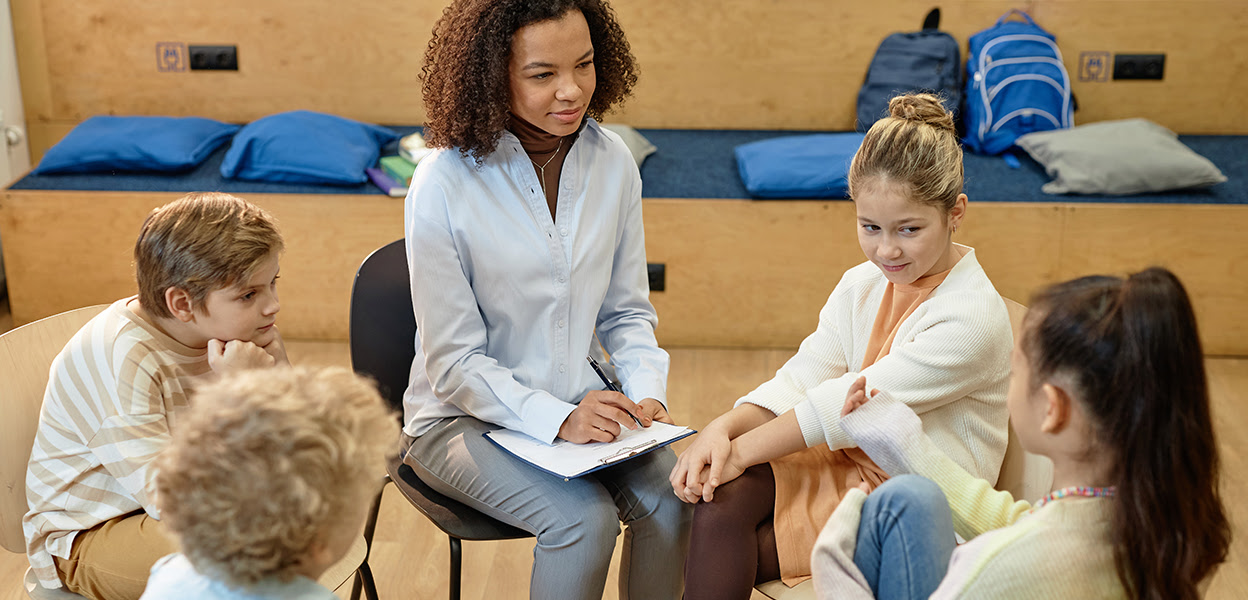
There's no better time than now to seek care for your child. Steps you can take include:
- Seeking out assessments for mental health issues, ranging from ADHD assessments to general psychological evaluations and more.
- Discussing your child's mental health with their teachers and school administrators, to look for specific signs that can be worth intervention.
- Considering the potential of a 504 set of accommodations or a dedicated IEP for your student, if necessary.
- Seeking at-home or out-of-school support from local providers and other resources, including social workers, financial support, and other community support.
Here at BMC-Troy, we're happy to provide many of these resources to our Detroit Metro community. Our staff can help with ADHD assessments, childhood and adolescent mental health care, medication management, psychiatric evaluations, and individual/group/family therapy, among other services. We can work with you directly, as well as work with your child's school to participate in the full continuum of care your child needs to succeed.
Getting started with BMC-Troy is simple. You can fill out our new patient intake form here on our website, or you can call us directly at 248.528.9000 to discuss needs and schedule a consultation.
You don't have to struggle alone to provide for your child's mental health needs. Resources are available, both through your child's school and through community organizations like BMC-Troy. All you need to do to get started is reach out.