

In Michigan, there are around 2.5 million people using Medicaid, which is around a quarter of the population of the state.
At the same time, around 1.8 million adults in Michigan experience some mental health condition, from short-lived stress-induced events to long-term chronic disorders.
Statistically, there's going to be a lot of overlap there. That means there are potentially over a million people hoping to get therapy from Michigan providers, using Michigan Medicaid or Medicaid expansions like the Healthy Michigan Plan.
What does Medicaid cover, and how? What do you need to know to get the care you deserve? Let's talk about it.
DISCLAIMER: This article is for informational and educational purposes only and should not be considered medical or psychological advice. The information presented here is not intended to diagnose, treat, cure, or prevent any mental health condition or replace professional therapeutic care. Every individual's experience with trauma and mental health is unique. Please consult with a qualified mental health professional, therapist, or healthcare provider to determine the most appropriate treatment approach for your specific situation. If you are experiencing a mental health crisis or emergency, please contact your local emergency services or crisis hotline immediately.
Who Provides Medicaid in Michigan?
Medicaid is a federally funded and managed program, but that doesn't mean the federal government is the one responsible for the day-to-day operations of the program. That responsibility is largely left to the states, which is part of why it can be hard to find truthful information online; every state, and indeed many different regions within states, has different rules.
In Michigan, Medicaid is actually managed by the same insurance providers that offer private insurance plans. The state is divided into different regions, and different plans are available depending on the region. For example, in the Upper Peninsula, Medicaid is only offered by the Upper Peninsula Prosperity Alliance.

Down here near Detroit, there are two different defined regions. One includes Wayne, Oakland, and Macomb counties. The other includes Livingston, Washtenaw, Jackson, Monroe, Lenawee, and Hillsdale counties.
The second region offers Medicaid through Aetna, Blue Cross Blue Shield, HAP CareSource, McLaren, Meridian, and United Healthcare.
The first offers the same selection, but is also serviced by Molina and Priority.
Does Your Choice of Medicaid Provider Matter?
Yes and no.
Broadly, Medicaid will cover more or less the same services across the board. This is because a lot of the rules that govern coverage are state-level or federal-level legislation. We've talked about this before in our guide to couples' therapy in Michigan, for example.
Your choice of plan matters more, though, because it determines which local psychotherapists, nurse practitioners, licensed therapists, and other therapists are available to you. Each individual service provider needs to have their own deal with the insurance companies, so different offices (and even different providers within a given office) will have different deals.

While this sounds very complicated, it really comes down to two things, depending on your situation.
If you already have a Medicaid plan, you can look up the service provider directory. For example, you can use this page from Priority Health, this page from Blue Cross Blue Shield, or this page from Meridian. These will give you a list of providers that accept your insurance from Medicaid.
It's important to mention that Medicaid plans are technically distinct from general insurance plans, even if they're offered by the same companies. You may need to make sure you're browsing the right directory, as some insurance providers maintain separate directories or use tags and filters to sort out their service provider lists. Each company is different, so you'll need to navigate their system.
If you don't yet have a Medicaid plan, you can look for any local therapist and ask if their office accepts Medicaid. Unfortunately, we aren't a Medicaid provider at BMC-Troy, though we do accept a range of private insurance plans. Many other therapists and offices throughout the Detroit area do accept Medicaid, however.
If you have neither Medicaid nor a therapist in mind, you are free to pick one or the other and go from there. Rest assured, Detroit is one of the densest locations in Michigan when it comes to options, so you're sure to find one that works for you.
Can You Change Your Medicaid Plan?
Yes. When you enroll with Medicaid in Michigan, you're asked to make a choice for which insurance provider you want to use. You are given 90 days to change your mind, during which you can pick a different plan. You might do this if you learn something negative about your provider, or you find a therapist you want to work with but who doesn't accept that plan, or really any other reason you could imagine.

After that, you can change your plan during open enrollment. Generally, you will receive a letter from the state informing you of your options when your turn comes around. This is not the same as the general open enrollment period for healthcare.gov plans, but it works in much the same way.
What Therapy is Covered by Michigan Medicaid?
In accordance with state and federal laws, Medicaid providers in Michigan are required to cover medically necessary behavioral therapy. This includes (but is not necessarily limited to):
- Individual therapy.
- Group therapy.
- Some family therapy.
- Treatment for anxiety.
- Treatment for depression.
- Treatment for trauma and PTSD.
- Substance use disorder counseling.
- Substance abuse intensive outpatient programs.
- Medication-assisted treatment for substance use.
- Some partial hospitalization programs.
Additionally, individuals with severe or complex needs, such as intensive cases, crisis services, partial hospitalization needs, and dual diagnoses, can be covered using the PIHP, or Prepaid Inpatient Health Plans.

The one hoop to jump through here is that you need to meet the definition of "medically necessary" for treatment. This means a licensed therapist, doctor, or other practitioner will need to perform an assessment and determine that you need treatment. They will assess you either as a first appointment aimed at assessing your situation or as part of intake during the first few sessions you have with them.
A recent change to the Medicaid policy and mental health framework here in Michigan has allowed for services to be delivered and reimbursed prior to an assessment being completed. That means you don't have to schedule a specific assessment before you can seek therapy; you can seek therapy first and sort out the details later.
Some forms of therapy are not covered by Medicaid. One of the most common examples is couples therapy, which we mentioned above and have a whole article about. Alternative therapies, such as life coaching, holistic healing, and some of the less proven treatment options, are also generally not covered.
How to Seek Psychiatric Care in Michigan Using Medicaid
If you've recognized the need for therapy and you want to find a way to get it, congratulations! Taking that first step is often the hardest part of the whole process. Let's do what we can to help you along.

First: while some guides will tell you to seek a referral from your primary care physician, this actually isn't necessary. Michigan has implemented a standardized screening process statewide, so any psychiatrist or practitioner you visit will perform the same basic assessment to diagnose your needs.
If you have a previous diagnosis, this can be reaffirmed and added to the Medicaid tracking system. If you already have a diagnosis with the Medicaid system, you don't need a new assessment, even if it has been a while since you've received therapy.
Enroll in Michigan Medicaid
If you aren't already signed up with Medicaid, you will need to apply for coverage.
Michigan has been revamping its government websites, so if you're used to the old system, the new one may look unfamiliar to you. The new page to use to enroll in Medicaid (including the Healthy Michigan Plan) is here. This is also where you can apply for other state benefit programs, and if you've done so before, some of your information is likely saved in the system.
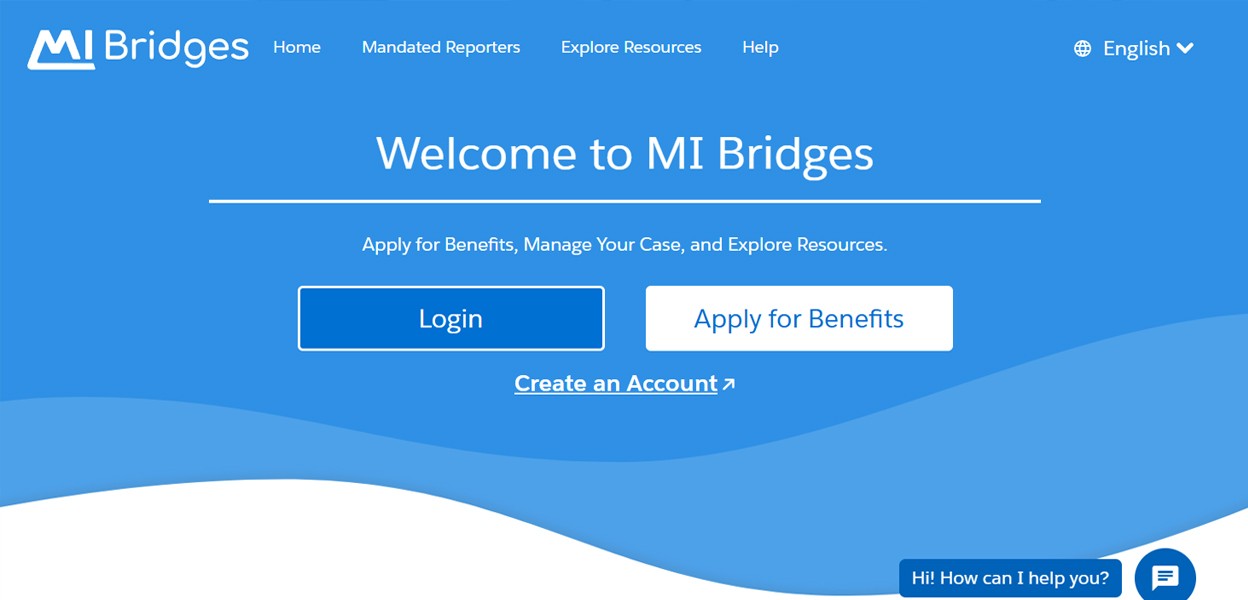
To apply, you'll need basic information about yourself, including your name, address, social security number, and so on. You will also need proof of Michigan residency and proof of income to ensure you don't exceed the maximum allowed to be on Medicaid. The income limits change from year to year. There are no asset limits, just income limits.
Generally, it will take several weeks before your application is processed and you receive a determination. The state tries to have all applications processed in under 45 days, though the actual amount of time will depend on the current application volume.
Once you're accepted into the program, you will be able to choose your Medicaid provider from among the available insurance providers mentioned above. You will be able to choose your provider, or one will be assigned to you if you don't make a choice. You are also free to change it within the first three months.
Seek a Source of Therapy
Once you're enrolled in Michigan Medicaid, you will need to find someone you're willing and able to work with for your therapy needs.
There are a lot of ways to go about doing this.
Sometimes, you can talk to your primary care provider about it. Some PCPs are happy to give you informal referrals. Others might not have specific recommendations. It doesn't hurt to ask, either way.
Another option is to use your Medicaid provider's directory. Each insurance provider will maintain a list of service providers that work with them.
You can also use third-party directories, like Psychology Today, FindMyTherapist, or GoodTherapy, to use some examples. You will want to filter by Medicaid as your insurance provider, and explore specialties and other details.

If you want a specific kind of therapy, like CBT, EMDR, DBT, or another modality, you can filter using those options as well. If you don't know what you want, simply finding a therapist who specializes in your issue (like anxiety, depression, or PTSD) can get you where you want to be.
Another option is to use a telehealth service. Some of the insurance providers support this directly, like Blue Cross Blue Shield. Others cover it but might not make it as obvious they handle it. Telehealth psychotherapy is still therapy, often provided by the same therapists, just through a phone or video call. Some people find this more comfortable, while others find in-person sessions to be more effective. Feel free to explore what works best for you.
Schedule an Initial Appointment
Once you're in the Medicaid program and you have chosen a therapist to work with, you will need to schedule an initial appointment.

This appointment will likely be an assessment, using the now-standardized assessment process, to determine the scope and breadth of your needs. This will inform your diagnosis and guide the rest of your treatment.
Proceed with Treatment
After that, it's up to you and your therapist to determine the appropriate course of treatment. This could be routine in-person sessions, hybrid sessions, a mixture of DBT and group therapy, or any number of other options. It all depends on what you need and what works best for you.
If at any point you are dissatisfied with your therapist, you are always free to change. You don't need to undergo another assessment, as your diagnosis will be part of the Medicaid system. Many people "shop around" for a therapist who meshes well with their personality and needs, and there's no shame in doing so. It's better to explore your options than to struggle through therapy with someone who isn't helping.

As you progress, it's possible that your income will grow until it exceeds the limit for Medicaid, and you may lose access to that insurance. If that's the case, you can still continue with therapy. You may need to change therapists, or you may need to seek new insurance that your current therapist accepts.
Here at BMC-Troy, we don't work with Medicaid, but we do work with all of the major insurance providers in SE Michigan, though it depends on the specific staff member you're working with. If you're in need of therapy across a wide range of different mental health challenges and needs, we're here to help if you have commercial insurance. If you have Medicaid, we may be able to assist you with counseling as an out of pocket cost. Medication management would need to be provided to you by someone within the Medicaid network.
You can call our office at 248.528.9000 with any questions, or fill out our new patient intake form here on our website. Taking that step to get the therapy you need is important - we're happy to help!