
Attention Deficit Hyperactivity Disorder, or ADHD, is one of the most common psychiatric disorders in both childhood and adults. People with the disorder tend to have trouble focusing, trouble keeping organized, constant fidgeting or talking, and may have impulse control issues, from impatience to interruptions and more.
These symptoms make life more difficult than it needs to be, but there’s good news: ADHD is eminently diagnosable and treatable. ADHD is diagnosed as much as 20% less often in adults than in children, simply because adults develop their own coping mechanisms; with the assistance of professional treatment, you can be given those coping mechanisms without having to muddle through on your own.
The first step to solving a problem is knowing you have the problem in the first place. For adults, that means recognizing the symptoms of ADHD and seeking an assessment. For parents of young children, it can mean recognizing the early warning signs of ADHD and bringing your child in for an assessment. Either way, a diagnosis of ADHD opens up a wealth of treatment options, from therapy to parental management skills to medications as necessary.
So, how do you check if you or your child has ADHD? An ADHD Test!
DISCLAIMER: This article is for informational and educational purposes only and should not be considered medical or psychological advice. The information presented here is not intended to diagnose, treat, cure, or prevent any mental health condition or replace professional therapeutic care. Every individual’s experience with trauma and mental health is unique. Please consult with a qualified mental health professional, therapist, or healthcare provider to determine the most appropriate treatment approach for your specific situation. If you are experiencing a mental health crisis or emergency, please contact your local emergency services or crisis hotline immediately.
What is an ADHD Test and What Does it Involve?
There are actually quite a few different ways that ADHD can be assessed.
One of the simplest assessments is one you can do at home, aimed specifically at adults. It’s called the Adult ADHD Self-Report Scale, and it includes 18 items that you answer based on how often the statement applies to you.
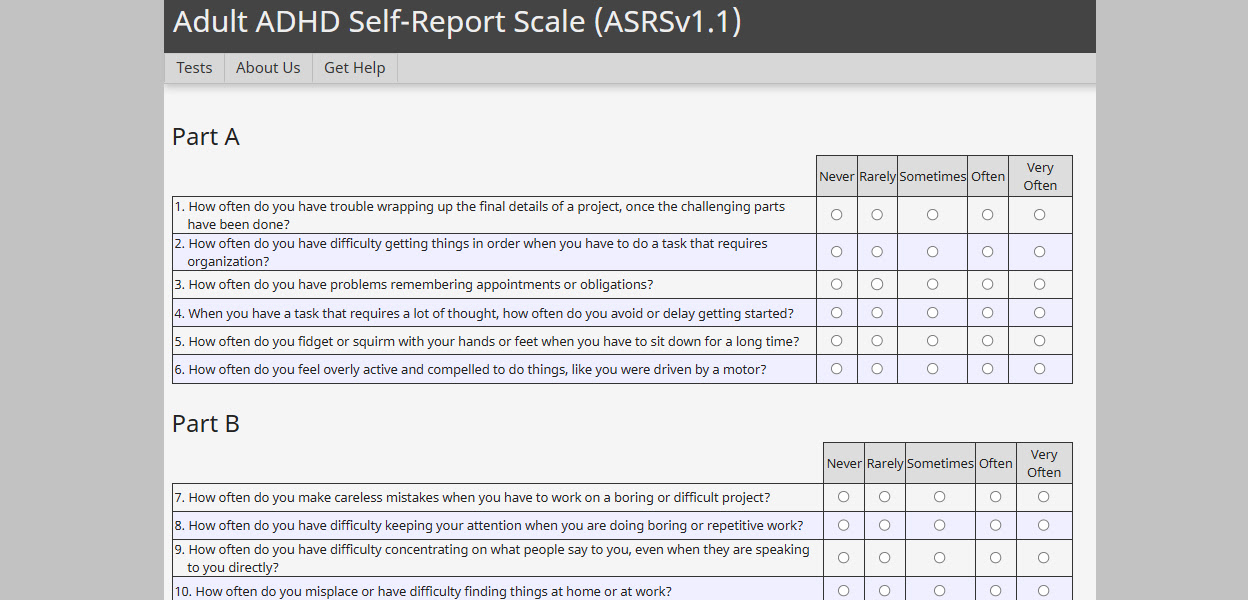
This is a very basic sort of assessment, and essentially gives you some food for thought to determine if you should consider pursuing a discussion with a therapist or psychiatrist. Since you can take it at home in just a few minutes, it’s easy to do a quick self-evaluation, but that’s about all the benefit it provides.
Professionals may also use a DSM-5 diagnostic assessment. The DSM-5 is the American Psychiatric Association’s Diagnostic and Statistical Manual, and is one of the best available resources for our modern understanding of mental health.
The DSM-5 lists a variety of criteria, such as “is often easily distracted” or “often fidgets with or taps hands or feet”. Having more than five or six symptoms can be indicative of ADHD, depending on the age group of the person being assessed. These are the criteria listed by the CDC for ADHD.
Another test, and one we offer at BMC-Troy, is called the Quantified Behavioral test, or QbTest. The QbTest is an in-office test that uses a reflective headband and a camera to monitor actions and behavior while an on-screen test is given. The test is short, between 20 and 30 minutes.
Essentially, the test monitors physical behavior and signs of inattention, impulsivity, and hyperactivity through motion tracking. People who have trouble sitting still and focusing will be tracked through the motion of the reflective headband, and a higher number of events is a stronger indication of potential ADHD.
While the QbTest alone isn’t used as the sole diagnostic criterion for ADHD, it’s a fairly reliable testing method. It has also been studied and proven to reflect the efficacy of medication for ADHD, meaning it can be used to assess how well ADHD medications are working.
These are not the only assessment methodologies available, but they are some of the most common.
Do You Need an ADHD Test to Get a Diagnosis or Treatment?
Yes and no.
In order to receive treatment for ADHD, you need some kind of assessment to be performed to indicate the need for that treatment. The assessment is important because there are many other things (like stress and drug use) that can have similar symptoms as ADHD, but mean ADHD treatment wouldn’t be effective.
But you don’t necessarily need one of the specific tests mentioned above. A provider can give you an assessment at an appointment, and they’ll be able to make that judgment based on the criteria they’re familiar with.

Evaluating for ADHD is important in all ages. In children and adolescents, a diagnostic ADHD test with a positive result opens up accommodations and resources that otherwise would not be available. These can range from activating the training teachers have for handling ADHD children, to specific resources for after-school programs, to therapy, medication, and more.
Note that you’ll need to be cognizant of rules surrounding mental health care and the rights of adolescents if you’re seeking assistance with an older child. It’s not a barrier to care, but a protection of privacy. Still, it’s worth making sure you know what limitations you may have.
It’s important to recognize, as well, that ADHD isn’t just one fixed illness. It’s a range of behaviors across a spectrum of severity. Different people with ADHD can express it in different ways, because it affects them differently, and because they’ve developed different coping mechanisms.
If you have a few symptoms of ADHD, or you think you’re seeing some in your child, we encourage you to talk to a practitioner for an assessment. If it turns out ADHD isn’t a relevant concern, all you’ve done is spend a short amount of time talking to a professional. At the same time, maybe you learn that you have more than you thought going on, or that your child is struggling more than they let on. It might also turn out that there’s something different besides ADHD going on, and you can roll right into an assessment for that.
Again, the first step to getting treatment and starting on the path to a healthier life is to recognize that there may be a problem in the first place.
Where Can You Get an ADHD Assessment in Detroit?
If you’re in the greater Detroit area and you’re interested in getting an ADHD assessment, either for yourself or for a child, you have a lot of options available to you.
Behavioral Medical Center in Troy
At BMC-Troy, we’re proud to offer our services for nearly any mental health challenge you may face. Depression, anxiety, PTSD, substance use disorder, ADHD, and even more temporary challenges like life transitions, such as grief or divorce, are all within our wheelhouse, among other common psychiatric conditions.
Our team of prescribers are competent in the most up to date medication treatment options. Our therapists are specialists in a variety of types of therapy, from cognitive behavioral therapy and dialectical behavioral therapy to EMDR, trauma release exercises, and more. You can read all about them on our clinical services page.
We are also one of the only places in Detroit where you can take the QbTest. It can be part of a basic assessment for you or your child, and can be conducted right here in our office in Troy. If you’re interested, give us a call or fill out the new patient intake form to get the ball rolling.
Oakland Neuropsychology Center
The Oakland Neuropsychology Center offers a wide range of testing for different mental health disorders, including ADHD, learning disabilities, autism, depression, anxiety, and more.
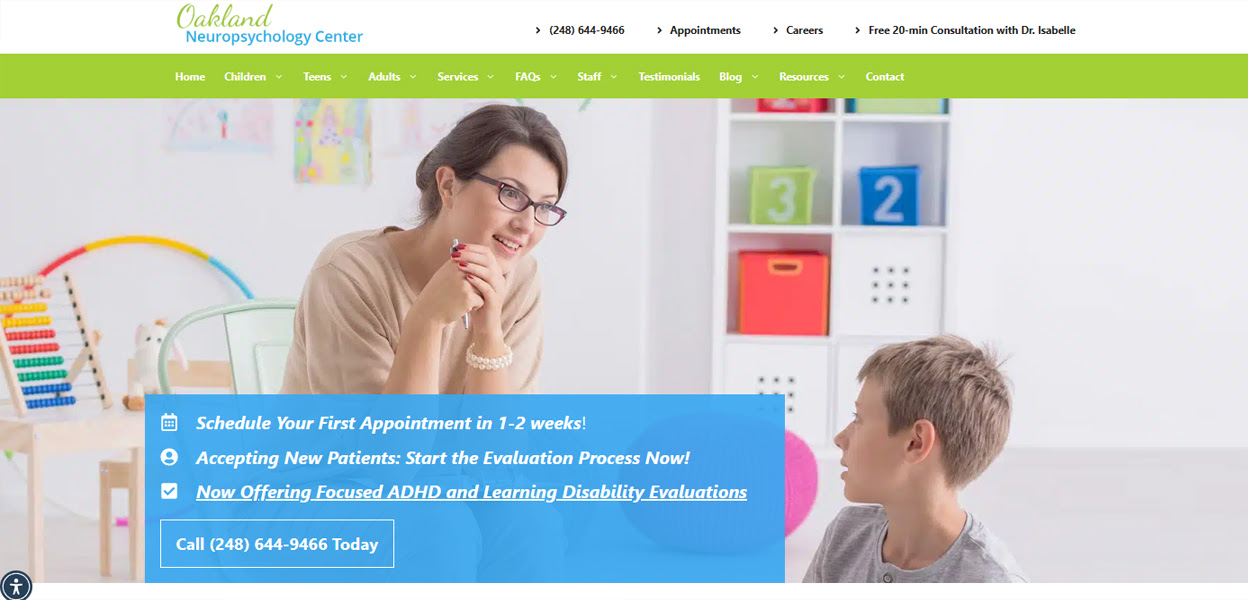
They also offer direct help with IEPs and 504s, and can help with accommodation for high-stakes testing like the SATs or the MCAT. Their office is located in Bloomfield Township.
Henry Ford Health
The big-name hospital network here in Detroit, Henry Ford offers just about anything you could want in both physical and mental healthcare. That includes assessments for ADHD for children, teens, and adults.
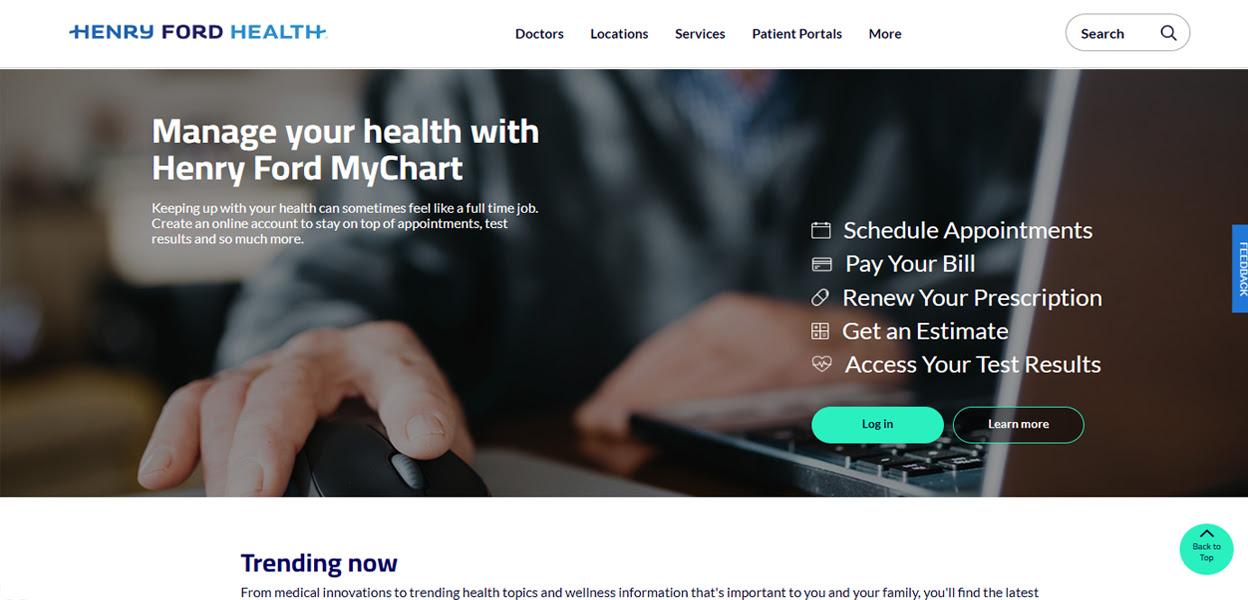
If you aren’t already part of the Henry Ford Health System, you’ll need to find a provider within their network who specializes in mental health and ADHD, is accepting new patients, and is located in an office you can access. There are around 250-300 behavioral health practitioners in the system, so there are a lot of options; it’s just a matter of finding the right one to work with you.
Wayne State University’s Psych Clinic
Wayne State University, here in the heart of Detroit, offers a psych clinic with a handful of services for adults and children. As far as assessments are concerned, they provide assessments for adults and children, but they are unable to offer prescriptions or medical evaluations. You can call their office to schedule an appointment.
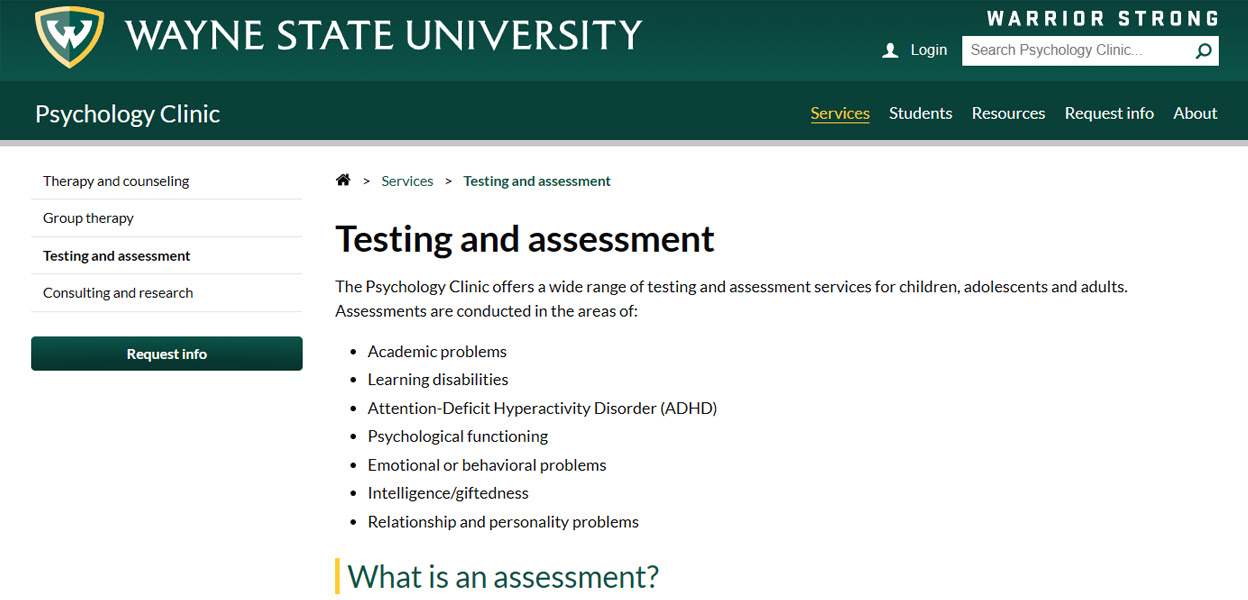
Wayne State also operates on a sliding fee scale, so if your insurance isn’t covering other options, or you don’t have insurance, you can work with them.
Najem ADHD Clinic
Located in Novi, the Najem clinic is run by Dr. Najem and has been in practice for 20+ years.
The clinic offers both child and adult assessments and treatment for ADHD.
CNLD Neuropsychology
CNLD has been in operation since 1992 and offers a wide variety of assessments for adults and children. They also work with geriatric patients and can test for dementia, Alzheimer’s, and more.
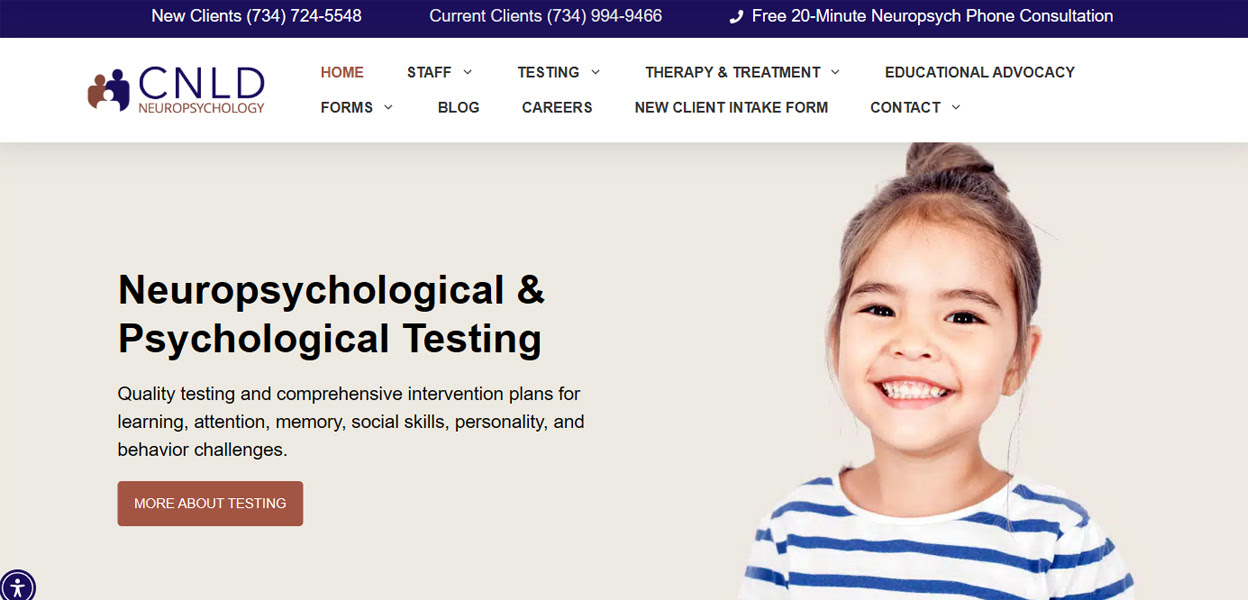
They are, however, located further afield than many of these other options, all the way out in Ann Arbor.
The ADHD Institute of Michigan
This organization is focused primarily on ADHD assistance and treatment, and provides both local and telehealth services throughout the state.
They’re also located in Ann Arbor, though you can work with them remotely as well.
Sachs Center (and Other Virtual Providers)
The Sachs Center is representative of a variety of online services that offer (somewhat expensive) telehealth testing. There are a number of such services, and we’re not going to list them out for a few reasons. The expense is one, but they’re also not local to us. They also typically just use the basic DSM criteria to evaluate you, something you don’t need to use their special services to do.
It can be fine if you have no other alternative, but our local options are more personal and better equipped to help you find care after an assessment.
Other Options
There are certainly other facilities in and around the Detroit area that offer mental health support. It’s important to explore your options and find the one that works best for you.

Remember, too, that just because you get an assessment at one facility doesn’t mean you’re locked into that facility. You can seek care anywhere equipped to provide it to you.
Seeking Care After an ADHD Diagnosis
Once you or your child has been assessed, your provider will explain to you what the results mean and what they open up for you.
For an adult, you will generally be referred to therapy, often CBT. CBT and similar behavioral therapies are some of the most effective options for handling ADHD as an adult, and can equip you with effective coping strategies that can last a lifetime. You may also be referred to a certified ADHD coach to help you in different ways than a therapist doing CBT.
For children, in addition to therapy, your provider can also help provide you with resources that can help make school life easier for your child. Programs like 504 plans (which are accommodation plans set by the federal government) or IEPs (individualized education programs, which are worked out between you and your child’s school) are good options for ensuring effective learning while accommodating ADHD.

For both groups, providers may recommend trying a medication in addition to counseling. There are a variety of medicines available that can help with the symptoms of ADHD, and you will work with your provider to determine what is most effective.
At BMC-Troy, we’re proud to offer all of the above. When you book an initial appointment with us, we can provide both a standard in-person or virtual assessment and a QbTest, which can approach the issue of ADHD both subjectively using your clinical history and objectively using the QbTest. When the assessments are done and a diagnosis is made, we can then work with you (or your child) for the appropriate therapy and medications, if needed.
If all of this sounds ideal, or even if you just want an assessment because you aren’t sure if you or your child has the symptoms of ADHD, you can give us a call or start the process right here on our website. We’ll help you access the care you deserve.