

A mental health crisis is nothing to be ashamed of, but it is something that needs immediate assistance. From panic attacks to suicidal ideation and more, there are many different possibilities that can occur in a crisis, and it takes a trained specialist to help you through them in the healthiest way possible.
Metro Detroit and the State of Michigan have many crisis resources, from lines you can call or text to walk-in centers where you can seek immediate treatment. There are even mobile care teams that can come to you if it’s not safe for you to go out on your own.
How do you access those resources, and which one should you call? We’ve put together this list of options for you. If you can’t decide, call 988; they can help you and hand you over to another team as necessary.
DISCLAIMER: This article is for informational and educational purposes only and should not be considered medical or psychological advice. The information presented here is not intended to diagnose, treat, cure, or prevent any mental health condition or replace professional therapeutic care. Every individual’s experience with trauma and mental health is unique. Please consult with a qualified mental health professional, therapist, or healthcare provider to determine the most appropriate treatment approach for your specific situation. If you are experiencing a mental health crisis or emergency, please contact your local emergency services or crisis hotline immediately.
MiCAL – Michigan Crisis and Access Line
When in doubt, call 988.
988 is the national number, like 911 for mental rather than physical health emergencies. In Michigan, it’s operated by MiCAL, the Michigan Crisis and Access Line. This is a state-wide source of mental health support, with trained crisis counselors available 24/7 to answer when you need it.
If you:
- Need to talk to someone
- Are worried about someone
- Feel overwhelmed with your situation
- Are experiencing emotional distress
- Are struggling to handle everything
Calling 988 is the right move.
If you’re in a situation where you can’t make a phone call, you can also text 988, or you can chat with them using their live chat system on the web.
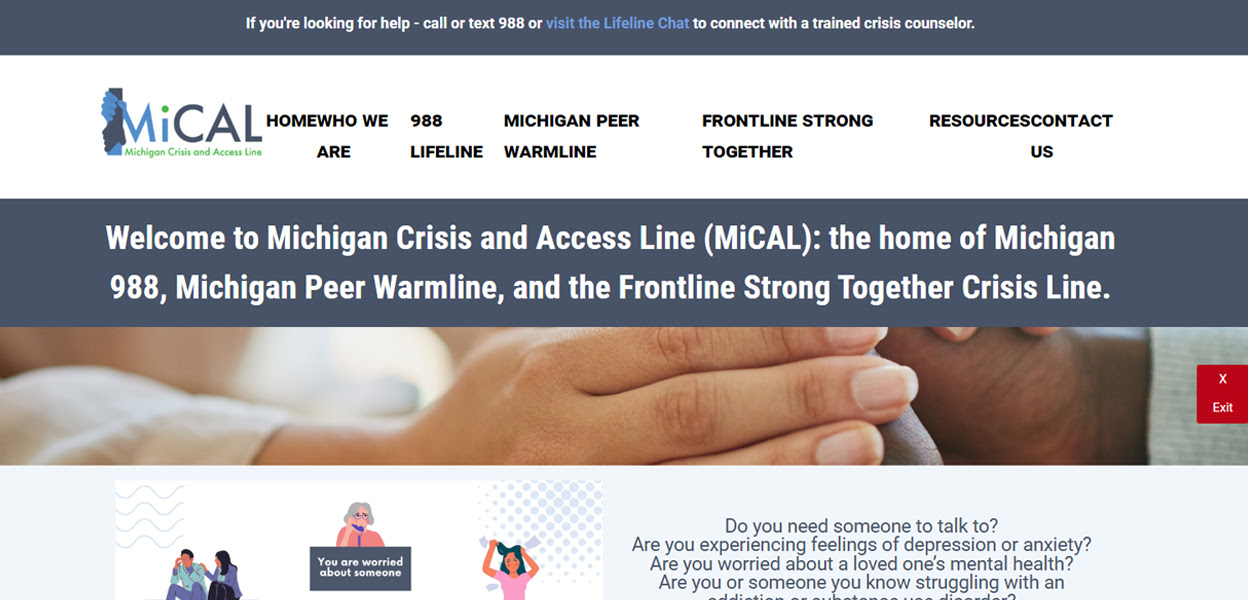
When you call or contact 988, you will be asked some basic questions to help you reach an option that helps you out. For example, if you need assistance in Spanish or if you are a veteran, you can access different services.
From there, a trained crisis counselor will pick up and ask you what’s happening. They will ask if you’re safe, if you need immediate emergency assistance, or if you need resources sent to you. They will listen to your concerns, help you navigate your thoughts and feelings, and can help you through your immediate crisis.
In cases where you need emergency assistance (such as risk of self-harm or substance use overdose), emergency services can be dispatched, and the counselor will stay on the line to ensure your safety along the way.
If you don’t need emergency services, once the crisis has passed, the counselor can help guide you to other resources that can help you with longer-term solutions to your problems. They can refer you to regional support services, for example, and can give you some idea of the next steps you should take.
Your best bet is going to be talking to the MiCAL support line in virtually all cases. Even if you can’t speak, they’re available, and it’s an entirely free service. If you’re experiencing a crisis, now isn’t the time to evaluate other options; just call 988 to get help now, and sort out alternatives later.
Michigan Peer Warmline
Another state-wide service, the Michigan Peer Warmline is sort of like a low-stakes crisis line. It’s aimed at people who have something like a crisis, but one without extreme levels of distress or risk, where you can call at your leisure, but still need faster help than what you would get calling a therapist’s office.
The Michigan Peer Warmline can be reached seven days a week, from 10 am to 2 am. Simply call 1.888.733.7753. You will be connected to a peer support specialist, who can help work with you through your issues.
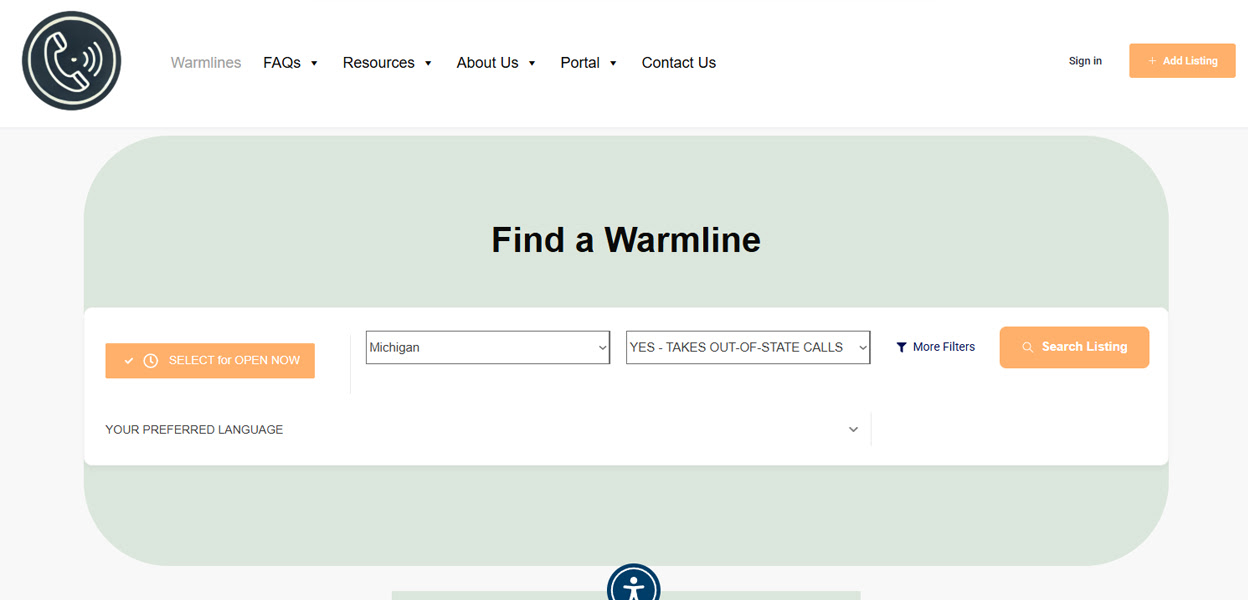
The Peer Warmline is an ideal choice if you believe your crisis is “not that bad” and that calling the 988 line would be a waste of resources. 988 will still help you if you call them, and you deserve assistance, but if you can’t get over that feeling, the warmline is a good alternative.
Detroit Wayne Integrated Health Network Crisis Services
DWIHN is one of the larger providers of health services in the metro Detroit area. They offer a crisis hotline, which is available 24/7, and can be reached by calling 1.844.462.7474.
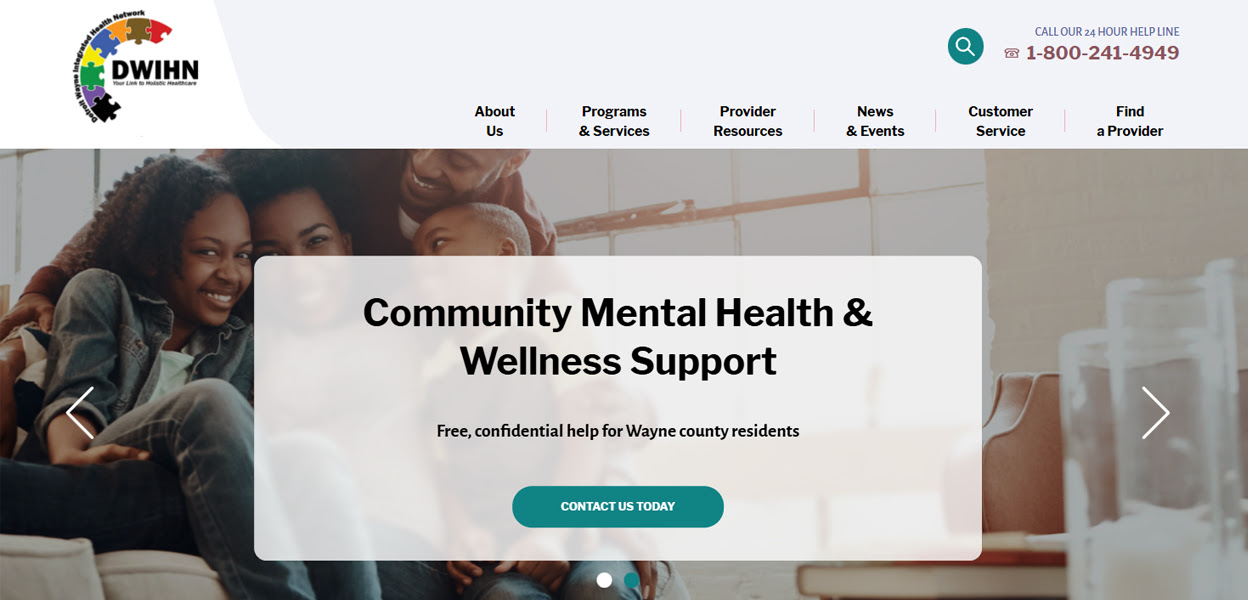
In addition to the crisis line, which offers services similar to 988, DWIHN also offers a range of in-person services.
- If you end up in the emergency room for a mental health crisis, generally a DWIHN staff member will visit you for an assessment. They can help with mental health treatment options, and can even assist with completing a pre-admission review.
- If you don’t want to go to an emergency room but you still need crisis services, DWIHN provides several crisis stabilization units throughout the metro Detroit area. These are like mental health crisis emergency rooms, where individuals can receive immediate support and up to 72 hours of crisis care, de-escalation, and service connections.
The DWIHN crisis stabilization units are located:
- Team Wellness East CSU at 6309 Mack, Detroit, MI, 48207. Tel: 313.331.3435
- Team Wellness West CSU at 34290 Ford Rd, Westland, MI, 48185. Tel: 313.391.2753
- DWIHN Care Center at 707 W. Milwaukee, Detroit, MI, 48202. Tel: 313.989.9444
DWIHN also has a mobile crisis stabilization unit that can come to you for de-escalation, resource provision, and service connections. Note that this is only for cases of crisis where there are no emergency safety concerns; if those exist, call 911 first.
Oakland Community Health Network Crisis Services (Common Ground)
OCHN offers a range of crisis services for both the general public and specifically youth-focused crisis services, with a youth-specific mobile crisis team available. Their in-house office is located at 1200 N. Telegraph Road, Building 32E, in Pontiac, MI, 48341. You can reach their crisis unit by calling 1.800.231.1127.
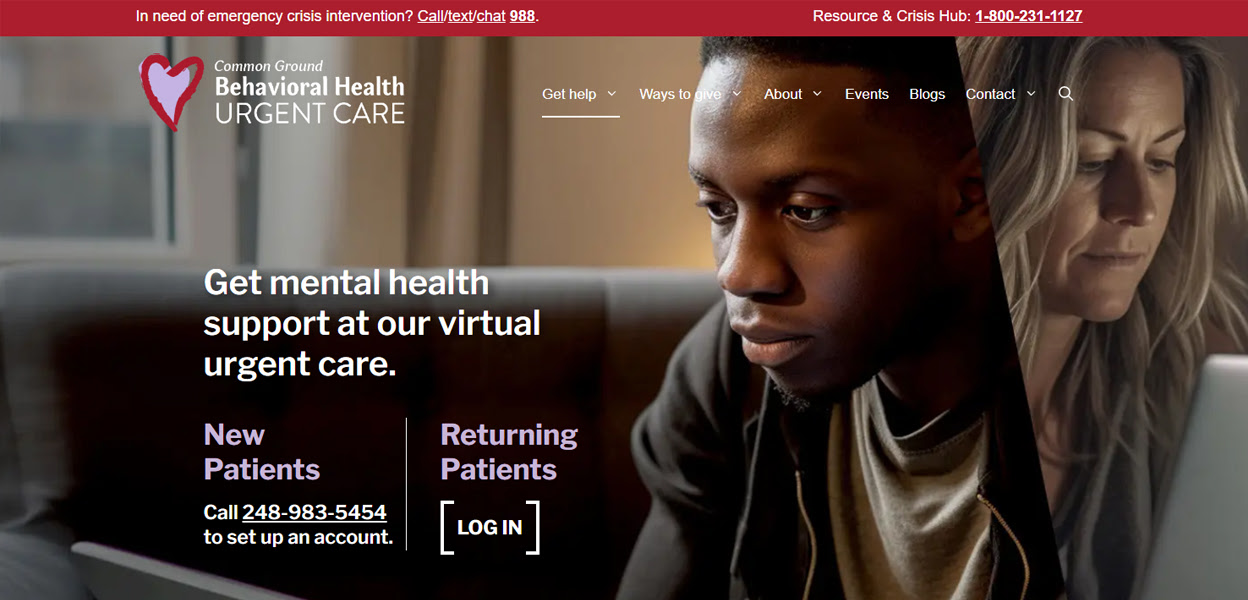
Common Ground also provides a ” behavioral health urgent care” as a middle-ground option for mental health crisis care. This is largely based in virtual visits, and can help with anxiety, depression, panic attacks, and even medication management.
Drop-In Care Centers
For something sort of like urgent care for mental health, in addition to the Common Ground care center, there are several drop-in care centers available for walk-in mental health treatment around the Detroit area. These centers can be found at:
- North East Drop-In, located in Hamtramck at 4301 McNichols Road.
- Our Place, located in Lincoln Park at 1742 Fort Street.
- Our Place Drop-In, located in Redford at 24425 Plymouth Road.
- Detroit Living Room, located in Detroit proper at 2870 E. Grand Blvd.
- Go Getters, located in Detroit at 2640 W. Vernor.
- Comfort Zone Unlimited, located in Novi at 39575 W. 10 Mile.
- Friends Assisting in Recovery, located in Pontiac at 484 Auburn Road.
- North Oakland Drop-In, located in Holly at 408 S. Saginaw.
- Peer Choices, located in Waterford at 1105 Telegraph Road.
- South Oakland Drop-In, located in Oak Park at 12718 W. Nine Mile.
- Liberties North, located in Clinton Township at 22754 Macomb Industrial Drive.
- Liberties South, located in Roseville at 26345 Gratiot Avenue.
The list of these care centers is maintained by the state government and can be found here.
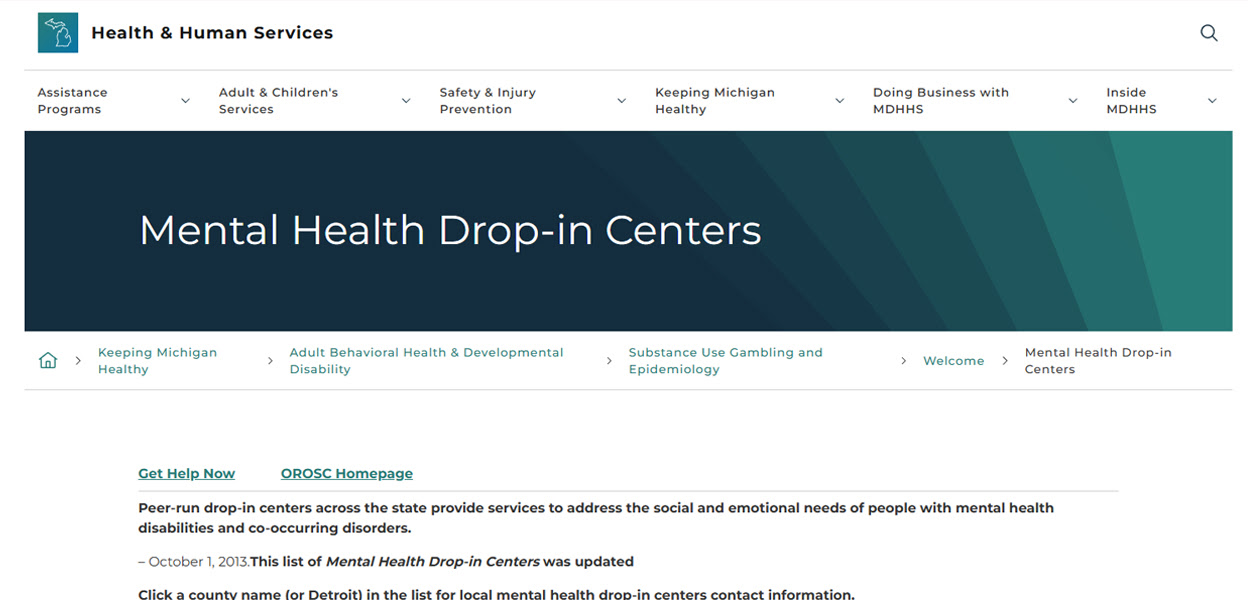
Additionally, depending on your existing connections, you may have unique resources available to you. For example, those attending Wayne State University have access to their counseling and psychological services center.
Any Emergency Room
While there are many dedicated mental health resources available, sometimes a mental health crisis may not feel like it’s mental. Panic attacks, for example, share many symptoms with heart attacks. Likewise, some mental health crises have physical components, including substance use and self-harm.
In any of these cases, or if you just don’t know where to turn, any of the local emergency rooms can help. Emergency room staff will perform triage to rule out physical emergencies, and can provide emergency treatment for substance abuse and other issues as necessary.
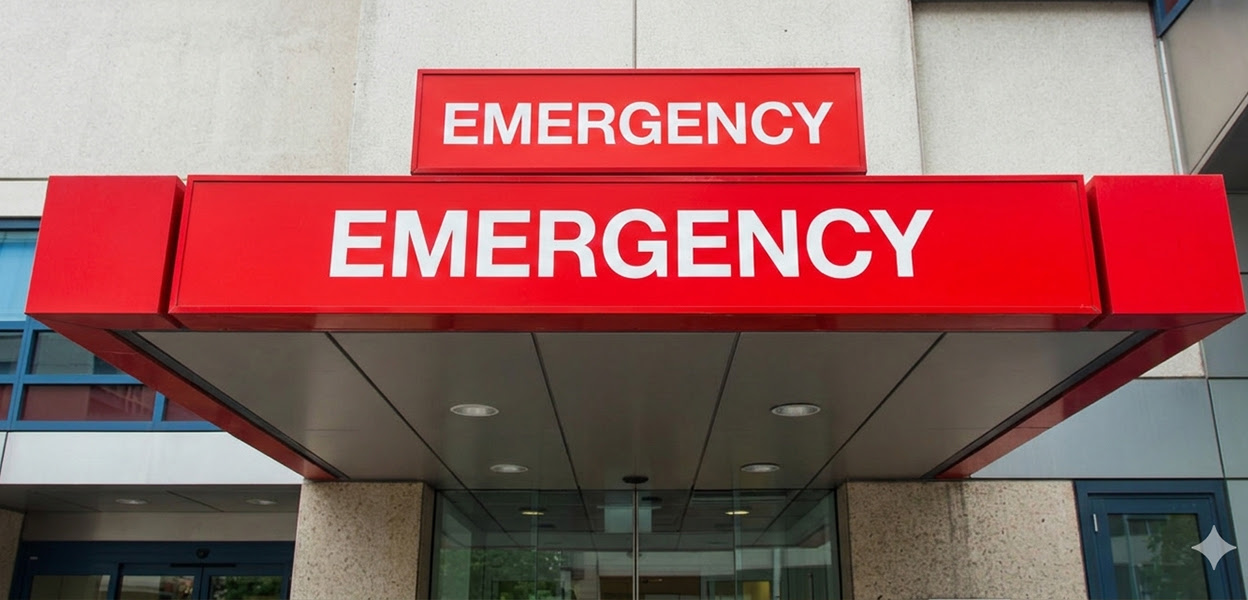
Certainly, the emergency room is not the best option for mental healthcare. They’re focused on physical health, and unless there’s a serious risk of immediate harm, you may be left sitting for quite a while as other emergencies are handled first.
Fortunately, Detroit’s emergency rooms tend to be on the better end of ERs nationally in terms of handling mental health issues. In addition to having trained staff, they have connections with, for example, the DWIHN staff as well. You can read more about this in our coverage of ERs specifically here.
Questions and Concerns About Mental Health Crisis Care
If you’re having a crisis or you’re worried you might and want to be prepared, there may be a lot of concerns circling your mind. It’s alright; that’s normal, especially in times of anxiety and stress. We’ll do our best to answer them here, and you can contact us directly with non-emergency questions if you need to.
What will it cost for mental health crisis care?
There’s no singular answer to this question. Calling 988, another crisis line, or many of the mental health services throughout Detroit is entirely free. Walk-in clinics and care centers range from free to operating on a sliding fee scale to being covered by insurance. Only some services, like the emergency room, have higher fees associated with them.
The important thing, though, is to seek care if you need it. Don’t let the potential cost keep you from seeking the care you need.
Critically, part of seeking mental health care is finding avenues to solve the problems that you face. When finances are one of those problems, crisis counselors and care providers can help direct you toward resources that can help.
What’s the best option for crisis care in Metro Detroit?
99% of the time, you’re going to have the best results by calling 988. They have a great history of serving our community and our state, they’re very experienced in handling pretty much every possible issue you could be experiencing, and they know what to do.
More importantly, the staff who work the crisis line know what to do after the crisis has passed. They can guide you through the next steps, help you get started with more advanced treatment, and even start the pre-intake screening process for long-term assistance.

Additionally, 988 is better equipped to handle a mental health crisis rather than a physical crisis, where 911 is more appropriate. If you’re worried about first responders not knowing what to do with you, 988 is ideal.
What should you do after you make it through your crisis?
While the next steps vary for everyone, the best thing to do is seek long-term treatment for your mental health. There are many different organizations and services throughout the greater Detroit area that can help you with this, including BMC-Troy.
Here at BMC-Troy, our staff is made up of a diverse mix of care providers, including physicians, psychiatric nurse practitioners, and psychotherapists, all of whom are deeply involved in our community and who want nothing more than to help you with your challenges.
For many people, a crisis is something of a wake-up call. It’s when those struggles you face go from something you can handle to something you can’t, and it’s a moment when the need for help comes into focus. That’s when it’s a great idea to contact us.
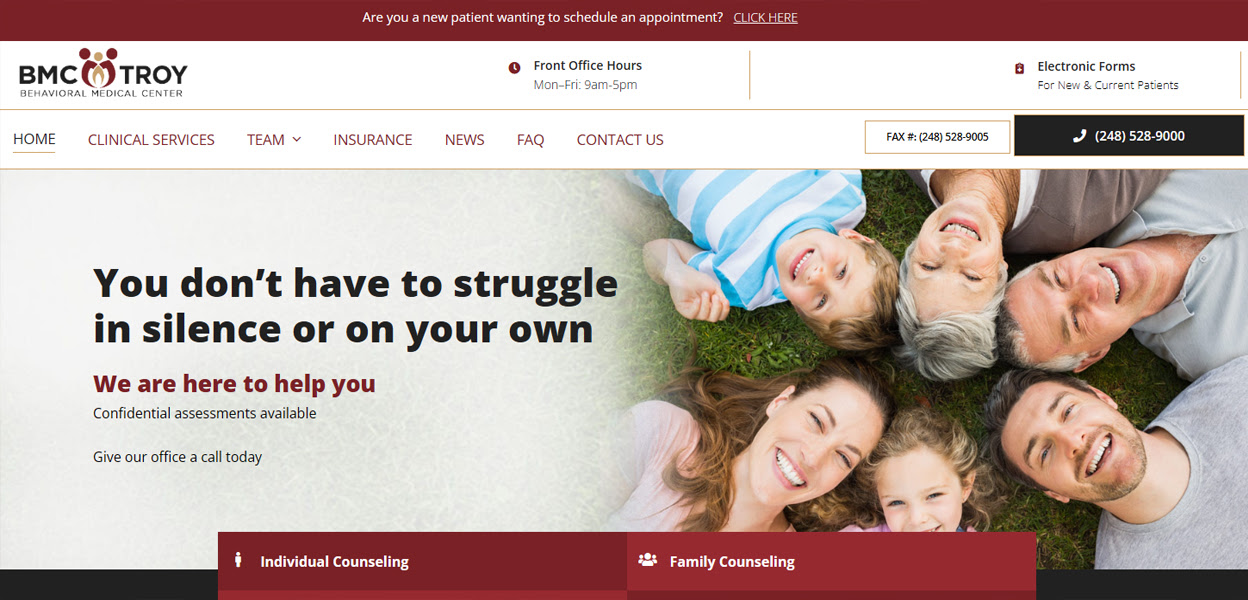
In addition to many other psychiatric conditions, if you are experiencing anxiety, depression, or PTSD, if you’re struggling with ADHD, if you’re working through grief or major life transitions, or if you’re coping with substance use, our staff can help. From proven talk therapy to trauma release and EMDR, our staff knows what to do to help you the way you need to be helped.
In cases where medication is indicated, we can also help with medication management, including both new prescriptions and adjusting old prescriptions as necessary.
To get started, you can fill out our new patient intake form here on our website, or you can call our office at 248.528.9000 during business hours or leave a message after hours. We will do our best to return your call within 24-48 hours.