

Michigan is an incredible state to live in. When you’re never more than a short drive from an excellent lake, when you’re surrounded by forests, parks, and other activities, when you’re still able to explore everything a city like Detroit has to offer, it’s brilliant.
The biggest downside is, arguably, the wintertime. It’s not just about the cold and the snow, either. We’re pretty far north, which means we’re already losing daylight when daylight savings hits, and the clocks fall back, leaving the sun going down at what feels like two in the afternoon. On top of that, the so-called permacloud (more prevalent on the west side of the state, but still occasionally present in Detroit) means the skies are often cloudy and gray.
You never quite think about how oppressive it can be to get up before the sun rises, commute while the world turns gray at best, work all day, and find it dark out before you get to leave to go home.
Even people who aren’t generally affected by seasonal depression can find the persistent gray, dim light, and short hours to be oppressive. If you’re susceptible to depression or you have seasonal affective disorder, the effect compounds.
It’s no wonder that thousands embark on seasonal snowbird trips down south, and many more face a constant struggle throughout the season.
DISCLAIMER: This article is for informational and educational purposes only and should not be considered medical or psychological advice. The information presented here is not intended to diagnose, treat, cure, or prevent any mental health condition or replace professional therapeutic care. Every individual's experience with trauma and mental health is unique. Please consult with a qualified mental health professional, therapist, or healthcare provider to determine the most appropriate treatment approach for your specific situation. If you are experiencing a mental health crisis or emergency, please contact your local emergency services or crisis hotline immediately.
Winter Blues vs. Seasonal Depression
Before we get into all of the ways the long gray winter can cause depression, and the ways you can deal with it, let’s talk about the kinds of mood patterns you might experience.
The first and mildest is known commonly as the Winter Blues. The so-called winter blues aren’t really a diagnosis, and may be more technically known as subsyndromal SAD. In other words, you feel sad, you may have some basic symptoms of depression, but they’re temporary and more likely tied to events in life. You might miss a loved one, feel deeper grief for a lost family member, feel the acute financial and social pressure of the holidays, or just be under end-of-year stress in general.
SAD, or Seasonal Affective Disorder, can be described as seasonal depression. Some people experience reverse-SAD, where they’re affected by it in summer rather than winter, but it’s more commonly recognized (and more easily studied) in winter-phase SAD.
SAD is characterized as a major depression and is worth seeking help over. It’s a form of depression where you feel sad or have little interest in daily life. You may not take enjoyment from daily living, you might have low energy levels, and you might gain weight due to various factors. People with SAD are often more likely to overeat, to under-exercise, and to sleep more and more.
All of this tends to compound itself. When you’re experiencing SAD, you’re less motivated or likely to get exercise or to get out of bed. You’re less likely to hang out with friends and family or go to events, and you may cancel plans you had. All of this tends to feed back into the overall oppressive winter depression and build the effects.

To be clear here, while both the winter blues and SAD can be fought through efforts to exercise, get more light, maintain a healthy diet, and so on, these aren’t a substitute for real treatment. A sun lamp and some vitamin D pills aren’t a guaranteed counterbalance to neurochemical changes, after all. If you’re worried about feeling SAD or if your seasonal depression is getting in the way of daily life, call and talk to a specialist. We’re here to help.
Serious depression and other mental health challenges can escalate into the realm of a crisis, too. If you’re experiencing a crisis, feeling suicidal or as if you simply don’t want to carry on, we highly encourage you to call 988 right away. The Michigan crisis line is staffed 24/7 with people equipped to help, and can connect you with local resources, who can even come to you.
Beyond simple depression, the long gray winters can also impact other mood disorders. Anxiety often worsens. Low levels of sunlight are linked to serotonin changes, which can impact mood in general and spike anxiety symptoms. It also doesn’t help, of course, that the holidays themselves are a stressful time for most people.
Bipolar disorder is also impacted, particularly on the depressive downswing, which is exacerbated by seasonal symptoms.
Why Michigan Winters are So Impactful
If you’ve spent a winter in Wisconsin, Montana, Washington, or Maine, you might wonder, what makes Michigan uniquely gray and oppressive feeling? What is it about the Great Lakes state that puts us near the top of the list as far as SAD goes across the 50 states?
One big reason is our defining feature: the Great Lakes themselves. These huge bodies of water soak up the warmth all summer long, and when winter rolls around, they’re still warm (compared to the air, anyway). That temperature difference causes moisture to rise into the atmosphere, which causes lake-effect snow in areas like western Michigan and the thumb. Detroit isn’t quite as hit by it, but we still catch strays from the storms as they pass.
The northern latitude is also a contributing factor. Being further from the equator means more disruption in day-night cycles and our circadian rhythms. In the depths of winter, we only get a meager 9 hours of daylight per day, and that’s before accounting for the clouds.
Sunlight is directly linked to serotonin production, and low serotonin means more fatigue, lower and suppressed moods, and SAD itself.
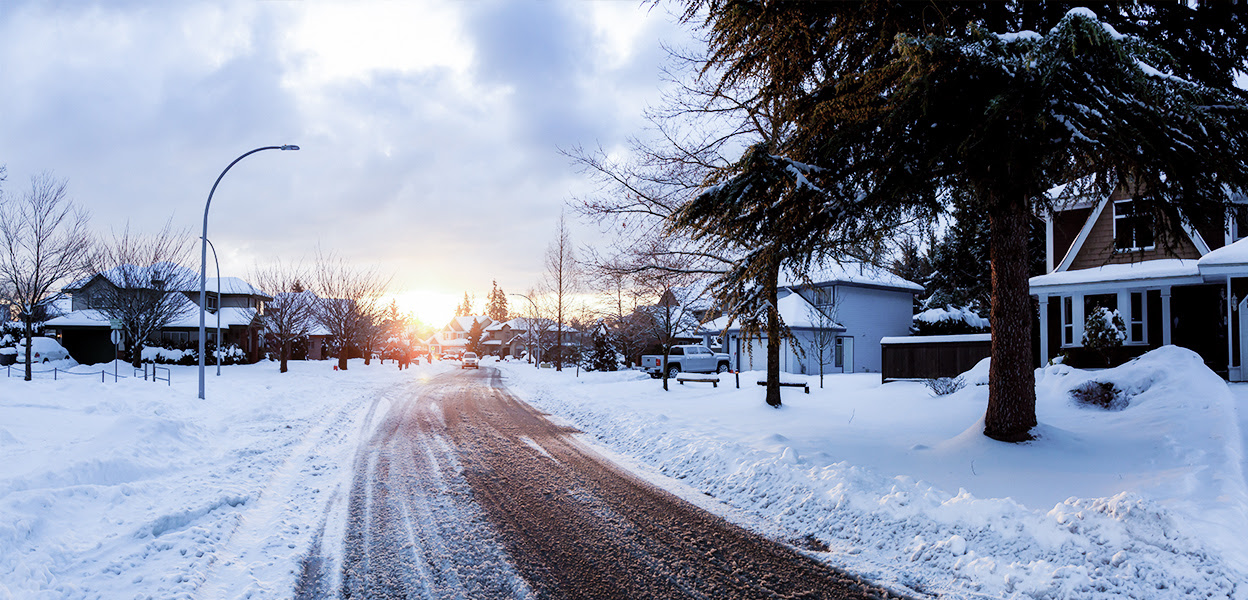
The cold and wind are also frequently oppressive. It’s hard to go about your life when merely existing outside is stressful, unpleasant, and occasionally even painful. Windchill can drop temperatures to astonishingly low levels for somewhere that isn’t above the Arctic Circle. In fact, there have been occasions where it’s literally colder in Michigan than it is in the Arctic.
Beyond that, you have the social burden of the winter. The holidays are looming, family obligations stack up, and the end of the year is often busy with crunch time for businesses. Layoffs happen, and the anxiety over whether or not you’re going to have a job when spring rolls around can be intense.
Travel, too. The roads can be a mess, and it can be dangerous just to move around the city before the plows get to it and the road is salted down. Flying is intense and stressful. It all adds up.
As if all of that wasn’t enough, winter is also frequently a time when seasonal infections run rampant. Travel contributes, but just cold, dry air makes us all more susceptible to viral infections like colds, and lower amounts of sunlight have a suppressive effect on the immune system.
How to Handle the Gray Winters in Michigan
What can you do to fight back against seasonal depression during Michigan’s gray winters?
The answer includes a lot of lifestyle and activity changes, some tools and supplies, and, of course, seeking therapy. For some people, the easiest answer is to snowbird down to Florida or elsewhere, but of course, that’s not an option for most of us. So, what can you do instead of simply leaving?
Spend time outdoors when you can. Even something as simple as a walk around the block every day can help ensure you’re getting some activity in, getting some fresh air, and getting some direct (or as direct as possible) sunlight.
On the sunniest days, try to spend as much time outdoors as you can to soak up those rays. Sure, you won’t exactly be sunbathing, but even just seeing the bright blue skies and doing a little basking can be helpful.
If you get the chance on a nice day, some of the local parks, as well as more in-demand locations like Belle Isle and the waterfront, can be pleasant to walk around and enjoy. Don’t forget to dress for the weather, and watch your footing on the ice where it isn’t cleared.

Don’t be afraid to keep warm. Yes, energy bills can be high this time of year, but that doesn’t mean you need to freeze in your own home. When you’re chilled, you feel drained, and you lose energy more easily, not to mention being more susceptible to fatigue.
- Consider turning the thermostat up a degree or two.
- Wear an extra layer; fuzzy socks, a hoodie, a comfortable robe, a hooded blanket, and similar warm apparel can help.
- Keep a warm beverage on hand. Coffee has its own problems, but tea, hot cider, or even a simple broth can be very warming.
- Consider window plastic to add an extra barrier to cut down on convective heat loss.
Even just eating a small, healthy snack can stimulate the metabolism and generate energy (and warmth), just don’t overdo it.
Speaking of, try to eat healthy as much as possible. It’s the holidays. We get it. Cookies around every corner, heavy meals celebrating every occasion, office parties and friendsgivings, there are a hundred reasons to eat all the unhealthy junk foods and heavy meals that tempt us.
When you can, though, aiming for a healthier diet helps cut back on the depressive effects of heavy junk foods. It’s also easy to be low on micronutrients, especially since you probably aren’t focusing as much on fresh produce in the depths of winter. You aren’t going to fight off seasonal depression entirely just by switching from cookies to carrots, of course, but it won’t hurt.
Many resources will also recommend vitamin D supplements. Sun exposure is the primary source of bodily vitamin D synthesis, so the theory is that taking more vitamin D during the winter could help with seasonal depression. Studies are mixed on how effective it actually is, but it doesn’t hurt to try.
Give light therapy a try. Light therapy means a sun lamp. Sun lamps simulate the full-spectrum light of the sun when it’s otherwise not available to us. The bright light helps trick the brain into producing the neurotransmitters and other chemicals responsible for regulating moods.
The trick with light therapy is that you can’t just buy any old bright lamp and sit in it whenever. It has to be an intentional activity, shining directly on your face shortly after waking up, for 20-30 minutes at a time. Used improperly, and it’s not going to do much for you. Used properly, it can be surprisingly effective.
When It’s Time for Therapy
The winter blues can be fought off through habits and activities, but when it comes to seasonal depression, it’s often a lot more intractable and difficult to challenge.
It’s important to recognize that seasonal depression is real depression. Just because it goes away when spring rolls around doesn’t mean you have to suffer all winter.
So, if you find yourself facing symptoms such as:
- Excessive fatigue
- Persistent sadness
- Anhedonia, the lack of enjoyment in activities and daily life
- Withdrawal from social experiences and obligations
- Weight gain, carb cravings, and constant snacking
- Constant oversleeping and the feeling of not wanting to get out of bed
- Increased irritability
- Feelings of hopelessness
- Issues focusing on tasks or work
- Thoughts of suicide
It may be time to consider psychotherapy.

Therapy can help in a lot of ways. A trained therapist can help validate your feelings and provide coping strategies and advice for lifestyle changes that can help. Beyond that, though, they can provide more structured ways of coping with the depressive thoughts and issues you face during the winter.
If it’s warranted, you may also be able to get medication for seasonal (or standard) depression, and can explore and examine other potential mental health challenges you face throughout the year.
The great news is, help is available right here in Detroit. At BMC-Troy, our office in Troy is accepting new patients for medication management and counseling, and we’re just a simple form away. You can also call us directly. We’ll help you make it through the winter and beyond.